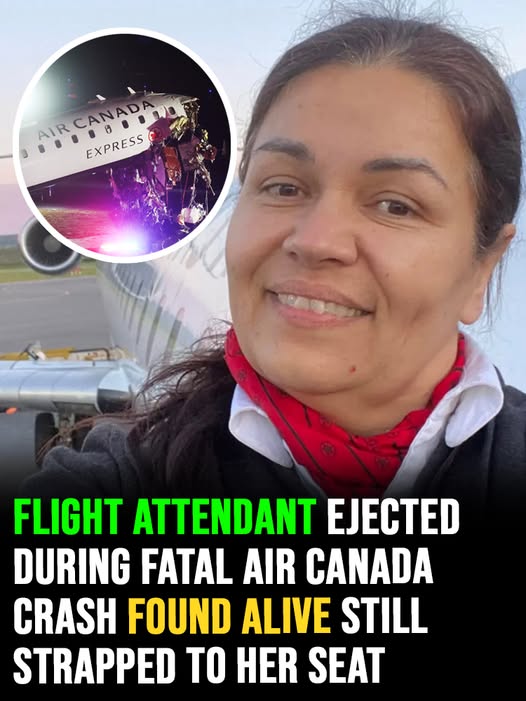
Two pilots were gone in seconds.
In the violent heartbeat of a collision that should never have happened, metal twisted like paper, engines roared into chaos, and LaGuardia’s runway was suddenly transformed into a scene of fire, wreckage, and stunned silence. Air Canada Jazz Flight 8646 had no time to react. One moment it was a routine landing. The next, it was catastrophe.
The impact was catastrophic. The aircraft struck a fire truck on Runway 4 in a collision so sudden and forceful that investigators later described it as unsurvivable for anyone in the cockpit. Both pilots died instantly. The front of the aircraft was obliterated. Emergency lights flickered across burning debris as dozens of passengers and crew were thrown into a nightmare they could not have prepared for.
But amid the destruction—something defied expectation.
A veteran flight attendant, 26-year crew member Solange Tremblay, was seated in her jump seat when the crash hit. In an instant, the force of the impact ripped her seat free from the cabin floor. It was launched more than 100 meters across the runway, torn from the aircraft like it weighed nothing at all. She was still strapped in when it landed.
When rescuers reached her, she was alone on the cold tarmac—seriously injured, her body broken in multiple places, but still breathing.
For her family, especially her daughter Sarah, the survival is almost impossible to comprehend. She calls it nothing short of a miracle. Surgeons later confirmed the extent of her injuries, including multiple fractures and a shattered leg, requiring urgent and complex operations. Each stage of treatment revealed just how close she had come to losing her life.
Investigators, however, saw something else in the chaos: the unexpected role of engineering. The reinforced flight attendant jump seat—built to withstand extreme crash forces so crew members can assist in evacuations—may have been the very reason she survived such an unimaginable trajectory. What was designed as a safety feature in theory became, in practice, a shield against total destruction.
In a tragedy defined by loss, fire, and split-second devastation, one survival stands out like a question no one can easily answer.
How did anyone live through that moment?
And yet—she did.