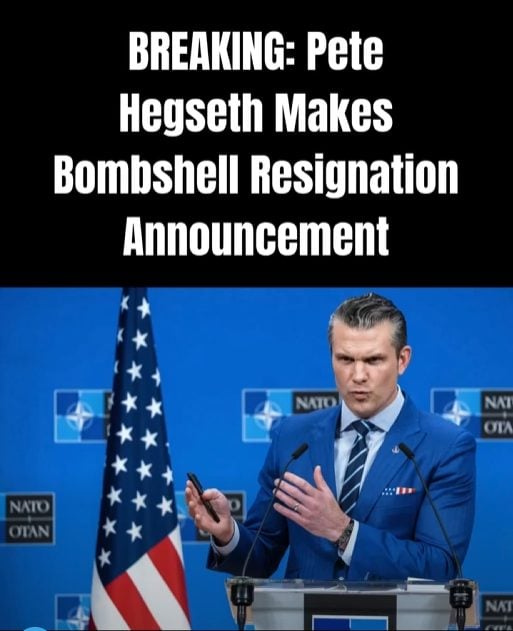
The denial didn’t arrive quietly — it came sharpened, defiant, almost combative. Standing beneath pastel Easter decorations, surrounded by flashing cameras and the carefully staged cheer of the White House Easter Egg Roll, Defense Secretary Pete Hegseth chose not to retreat. Instead, he went on the offensive.
And this wasn’t a clash with foreign adversaries or battlefield rivals. It was something more personal, more political — a war of words against the media, anonymous leakers, and a growing narrative suggesting he had lost the confidence of President Donald Trump.
At the center of the storm were swirling allegations: claims of sensitive Yemen-related intelligence being discussed over the Signal messaging app, reports that sparked confusion, pushback, and rapid-fire corrections across outlets like NPR, and an escalating demand from Democrats calling for his resignation. In Washington’s ever-turning cycle of controversy, the story had quickly become bigger than the original claims — it had become a test of credibility, control, and loyalty.
Hegseth, however, refused to play the role assigned to him by critics. Instead, he framed the entire episode as something far more deliberate: a coordinated political knife fight unfolding inside the Pentagon itself. In his telling, the source of the chaos wasn’t misjudgment or miscommunication, but rather “disgruntled former employees” and a familiar Washington ecosystem that thrives on anonymous leaks, selective outrage, and the lingering shadows of Trump-era political warfare.
To his allies, the controversy over Signal is not an isolated failure but a recycled playbook — a familiar pattern of what they describe as politically motivated smear campaigns, echoing past battles over intelligence leaks and alleged “hoaxes” that dominated earlier administrations. To his critics, however, the same episode looks far more alarming: a troubling sign of carelessness with sensitive operational details, where even a single misstep could carry consequences far beyond Washington’s political theater.
As the debate intensifies, President Trump’s repeated public backing of Hegseth has transformed what might have been a routine security controversy into something more volatile — a loyalty test played out in real time at the highest levels of government. Supporters point to the administration’s firm messaging, including sharp dismissals of NPR as “fake news,” as evidence of unity under pressure. Critics, meanwhile, argue that the stakes are far more serious than partisan messaging, insisting that any suggestion of operational details being mishandled in private channels raises urgent questions that cannot be brushed aside.
For now, Hegseth remains firmly in place, shielded by a president who has long prioritized loyalty, loyalty tested under fire, and perceived victory over procedural caution. The administration continues to describe the Yemen mission as “unbelievably successful,” emphasizing outcomes over controversy. Yet in Washington, the political aftershocks are still spreading, and the full weight of the fallout has yet to settle.