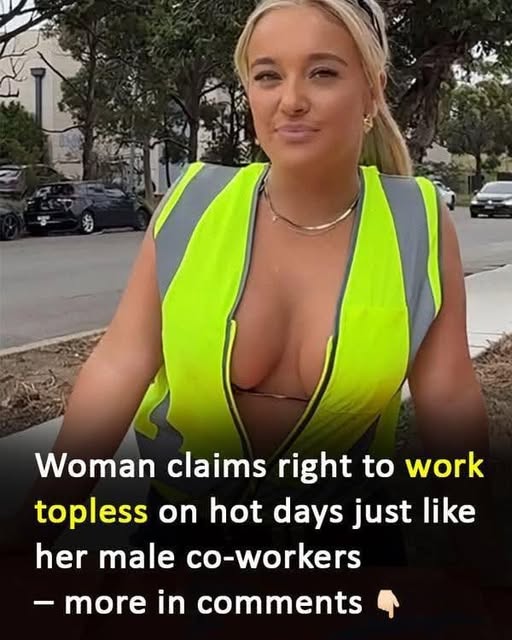
It began under a punishing 40-degree heatwave on a Sydney construction site—where steel beams shimmered, concrete radiated warmth, and tempers were already thinning under the weight of exhaustion. In the middle of it all came a question that instantly cut through the noise: why is it acceptable for men on-site to strip off their shirts in the heat, while a woman working right beside them is expected to stay covered?
That question didn’t stay quiet for long.
Shianne Fox, a bikini-clad tradie working in a male-dominated environment, became the unexpected center of a much larger cultural storm. On paper, it looked like a simple dispute over dress code. In reality, it exposed something far deeper—an unspoken double standard that has long lingered in physically demanding workplaces.
For Fox, the frustration wasn’t born in a single moment, but accumulated over years of being told—directly or indirectly—that her comfort came second. That male bodies on a job site are “just practical,” while female bodies are automatically “distracting.” In the blistering heat, she pushed back against that logic, arguing that professionalism should be defined by skill, safety, and behavior—not by how much skin is deemed acceptable under the sun.
To her supporters, her stance became a raw expression of workplace equality taken to its most literal extreme: if heat affects everyone equally, then rules should too. If men are allowed to remove shirts to cope with extreme conditions, then women, in theory, should not be penalized for seeking the same relief. In her view, fairness doesn’t come from different rules for different genders—it comes from applying the same standard to everyone, regardless of tradition or discomfort.
But the reaction was anything but unified.
As videos and commentary spread, so did criticism—particularly from other women working in trades who saw the situation very differently. For them, the issue wasn’t just about heat or clothing. It was about perception, respect, and survival in an industry where women already make up a small minority and often fight twice as hard to be taken seriously. Some argued that provocative imagery or adult-content associations could reinforce stereotypes they are actively trying to break down, making it harder for female tradies to be seen first as professionals rather than distractions or controversies.
This is where the debate fractured into something far more complex than a dress code dispute.
At its core, the controversy revealed a tension within modern equality movements itself: should progress be pursued by blending into existing norms until they dissolve on their own, or by confronting those norms head-on—even if it causes discomfort, backlash, or public division?
Fox’s story doesn’t offer an easy answer. Instead, it leaves behind a heat-hazed question hanging in the air of that job site: equality is not only about what people are allowed to remove under pressure, but also about what expectations, judgments, and burdens they are still forced to carry—often long after the tools are down and the workday is over.