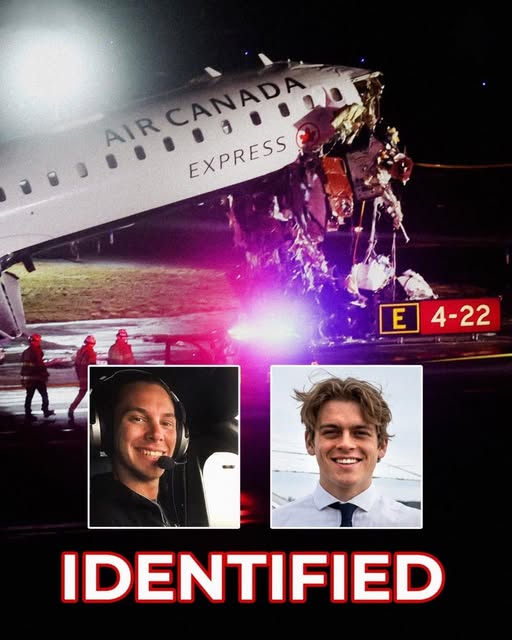
They never had a chance — at least, that’s how it looks when you freeze the moment and play it back in your mind.
Two young pilots. A routine landing. A fire truck that had no business being where it was. Then, in the span of a heartbeat, everything fractured. Steel screamed against steel. The runway became a blur. Lives that had been moving forward in ordinary, predictable ways were suddenly cut short. The airport, a place built on motion and precision, fell into a stunned, unnatural stillness. And somewhere in the chaos, over a crackling radio, a quiet voice broke through with a confession that now haunts everyone who’s heard it: “I messed up.”
But what really happened in those final moments isn’t just a sequence of errors or a timeline to be reconstructed. It’s a human story — one that unfolded in seconds, yet will be examined, debated, and remembered for years.
To most of the passengers, the men in the cockpit were strangers. Just names on a manifest. Voices never heard. Faces never seen. Antoine Forest and Mackenzie Gunther were, until that moment, background figures in a journey defined by departure times and seat numbers. But when everything went wrong, they became something else entirely — the thin line between order and catastrophe.
They came from different worlds. Forest’s path had been carved through rugged airstrips and long hours in maintenance hangars, where instinct is sharpened by experience and mistakes are paid for immediately. Gunther’s journey was more structured, built in classrooms and on tarmacs, where discipline and procedure are drilled until they become second nature. Different beginnings, different rhythms — but the same belief at their core: that preparation, focus, and calm under pressure could hold the unthinkable at bay.
And for a moment, it did.
When systems failed and the situation unraveled faster than training could fully contain, that belief was all they had left to lean on. Inside the cabin, passengers would later describe something unexpected — not chaos, not panic, but a strange, steady sense of control. The kind that doesn’t come from everything going right, but from knowing someone is still fighting when it all goes wrong.
They remember the feeling more than the details. The subtle steadiness. The absence of fear spreading forward. The sense that, somehow, the people in that cockpit hadn’t given up.
Investigators will eventually chart every variable. They’ll analyze approach paths, communication breakdowns, positioning errors, and the fatal presence of that fire truck. They’ll reconstruct the sequence with precision, reducing tragedy to data points and decisions. And those answers will matter — they always do.
But for the people who walked away, the story isn’t defined by charts or conclusions.
It’s defined by those final seconds.
By the knowledge that, when the margin for survival disappeared, two men stayed at their posts. That they kept trying — not because they believed they would succeed, but because stopping was never an option. That even as the aircraft lost its fight with physics and circumstance, the fight inside the cockpit never stopped.
In the end, that’s what lingers.
Not just what went wrong — but what didn’t.
Because when everything else failed, they didn’t.