Donald Trump has once again ignited a political firestorm, adding fresh fuel to an already overheated week of controversy. It’s been a stretch filled with viral outrage, bizarre AI-generated religious imagery featuring “AI Jesus,” and even a widely discussed public clash involving the Pope. But just when the news cycle seemed unable to get more chaotic, Trump shifted the spotlight back to one of his most enduring political rivals: Barack Obama.
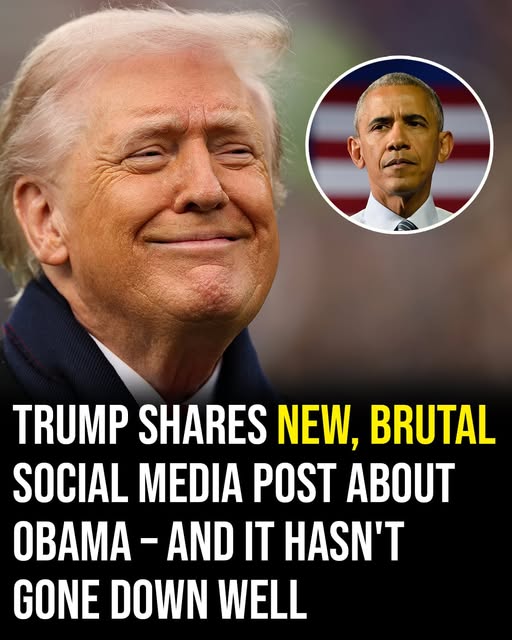
This time, it began with a single reposted meme. On the surface, it showed Trump in a victorious, almost celebratory framing over Obama — a visual joke designed to signal dominance, confidence, and political superiority. The caption carried a smug, triumphalist tone, the kind that invites instant reaction in a hyper-connected online world. Within minutes, the internet did what it always does: it exploded.
For Trump’s supporters, the post landed very differently. Many viewed it as a symbolic win rather than a literal claim — a playful but pointed reminder, in their eyes, that Trump had defied expectations, beaten political odds, and challenged what they see as a long-entrenched establishment. To them, it was less about Obama personally and more about the narrative of political disruption and comeback energy.
But for critics, the reaction was sharply more critical and far less forgiving. They saw the meme not as humor, but as provocation — another example of what they describe as Trump’s fixation on personal rivalries and old political grudges. Some called it immature, others called it cruel, and many framed it as beneath the dignity expected of a national leader, past or present. In their view, it wasn’t a moment of strength, but a display of insecurity wrapped in satire.
The backlash quickly spread across social platforms, where commentators revisited old moments of political theater, including Barack Obama’s famously cutting remarks at the White House Correspondents’ Dinner. Others questioned the factual grounding behind the meme itself, arguing that it blurred the line between political commentary and misinformation-driven entertainment. Threads filled with frustration pointed to a broader concern: that American political discourse is increasingly being shaped by memes, humiliation tactics, and viral one-upmanship rather than policy or principle.
What made the moment resonate so widely wasn’t just the content of the meme, but what it seemed to represent. For many observers, it symbolized a deeper fatigue with modern politics — a cycle where leaders and audiences alike are pulled into endless performance battles, where victory is measured in online engagement rather than governance. The tone, the timing, and the repetition of old rivalries all fed into a sense that political dialogue is becoming more about spectacle than substance.
In the end, the uproar wasn’t really confined to Trump or Obama. It became a reflection of something larger and more uncomfortable: a country increasingly divided not only by ideology, but by the very style of its political conversation. For some, it was just another meme in a never-ending feed. For others, it was a warning sign about where that feed — and the politics it shapes — may ultimately be heading.