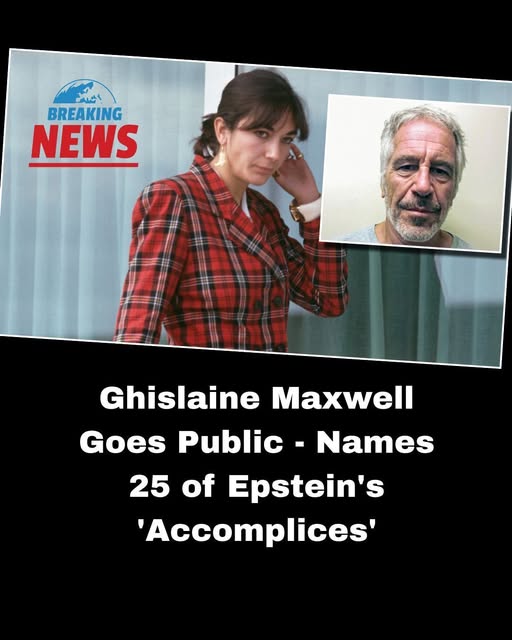
Ghislaine Maxwell is not finished speaking. From the confines of a Texas prison cell, the convicted sex trafficker is now leveling explosive accusations—not just against powerful men she says were part of Jeffrey Epstein’s world, but against federal prosecutors and victims’ attorneys whom she claims helped quietly bury the full truth. According to Maxwell, as many as 25 alleged Epstein accomplices were allowed to slip away through undisclosed agreements, while four named staff members emerged entirely unscathed. If her assertions are even partially true, the public version of the Epstein scandal may represent only a fraction of the real story.
Writing in a handwritten court motion, Maxwell is attempting a dramatic reframing of her role. She no longer casts herself as Epstein’s willing and unrepentant partner, but as the sole figure left to absorb the blame for a far wider operation. In her telling, justice was not evenly applied. She and Epstein, she argues, were publicly sacrificed—his death closing the door on further accountability, her conviction sealing the narrative—while dozens of alleged male co-conspirators, she claims, quietly paid their way into anonymity and freedom.
Maxwell describes what she calls a two-tier system of justice: one brutal and visible, the other discreet and protective. She insists the identities of these men were deliberately withheld, not out of legal necessity but by design. Prosecutors and civil attorneys, she alleges, “colluded” to suppress witnesses and evidence that might have spread culpability beyond her alone, or at least complicated the clean, singular villain the public was given.
These allegations arrive at a moment of renewed scrutiny. The federal government is now legally compelled to unseal and release portions of the long-guarded Epstein archive, reopening wounds many institutions seemed eager to let scar over. Yet only a sliver of the required documents has been made public so far. With each incremental release, the same unsettling questions grow louder—questions Maxwell is now aggressively pressing from behind bars: Who else knew? Who else participated? And who, exactly, was shielded from consequences?
Maxwell’s appeal may ultimately fail in court. Judges may reject her arguments, and her sentence may remain unchanged. But the doubt she is injecting into the official record is harder to dismiss. Long after her legal options are exhausted, the shadow she is pointing to—of power, secrecy, and selective accountability—may linger, demanding answers that the justice system has yet to fully provide.