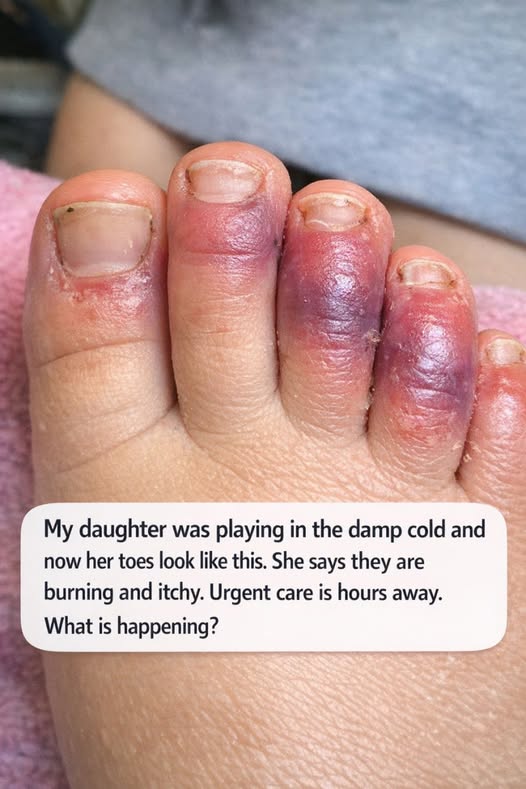
Her toes were suddenly bright red, swollen, and burning to the touch—and in that instant, your stomach sank.
Was it frostbite? An infection? Something serious you didn’t notice in time?
Your mind starts racing back through every moment outside in the cold: the snow play, the excitement, the “just five more minutes” before heading in. What felt like harmless winter fun now feels like a mistake you can’t undo.
But before panic takes over, there’s something important many parents don’t realize: this frightening reaction is often not frostbite at all.
What you’re likely seeing is chilblains—a surprisingly common but rarely talked-about skin reaction to cold, damp weather followed by rapid rewarming. Instead of freezing or dying tissue like frostbite, the problem starts much smaller and deeper: in the tiniest blood vessels of the skin.
When exposed to cold and then suddenly warmed up again, these delicate vessels can overreact. They expand too quickly, becoming inflamed and slightly “leaky.” The result is a very uncomfortable but usually temporary condition—skin that turns red or purplish, swells slightly, and becomes intensely itchy, burning, or tender.
It most often shows up on fingers, toes, ears, or heels—areas furthest from the body’s core heat. And children and teenagers are especially prone to it. Their circulation systems are still developing, and their excitement outdoors often means they ignore early warning signs like tingling, numbness, or discomfort just to keep playing a little longer.
Seeing it for the first time can be alarming. It can look dramatic, even severe. But in many cases, chilblains are not dangerous—they are the skin’s exaggerated reaction to temperature change.
What you can do at home
The goal is simple: calm, gradual recovery—not shock or sudden heat.
Gently warm the affected area using soft, dry layers like socks or blankets. Keep the room comfortably warm, but avoid placing the skin directly against heaters, hot water, heating pads, or anything too intense. Rapid heat can actually make symptoms worse by further irritating the blood vessels.
Avoid rubbing or massaging the area vigorously, even if it itches or burns—that can increase inflammation. Instead, focus on gentle comfort.
Make sure socks and footwear stay dry, because moisture combined with cold is one of the biggest triggers. Light movement—like wiggling toes or walking slowly indoors—can also help improve circulation naturally.
When to take it seriously
While chilblains often improve on their own within days to a couple of weeks, it’s important to watch closely for warning signs that something more serious could be happening. Seek medical advice if you notice:
- Blisters forming on the skin
- Pain that is getting worse instead of better
- Redness spreading beyond the original area
- Pus, open sores, or signs of infection
- Skin that turns white, gray, or unusually dark
A doctor can confirm whether it is truly chilblains and rule out other conditions like frostbite, Raynaud’s phenomenon, or skin infection. In some cases, they may recommend medicated creams or treatments to improve circulation and reduce inflammation.
The reassuring truth
As worrying as it looks in the moment, chilblains are usually temporary and fully reversible. With the right care, warmth, and a bit of patience, the skin heals completely—and your child is back to running, playing, and enjoying the snow again.
The key is not fear, but awareness: dressing warmly in layers, keeping feet dry, and building in regular warm-up breaks during cold-weather play can prevent it from coming back.
So while those bright red toes can be terrifying at first glance, the story they’re telling is often far less dangerous than it feels in the moment—and far more manageable than it first appears.