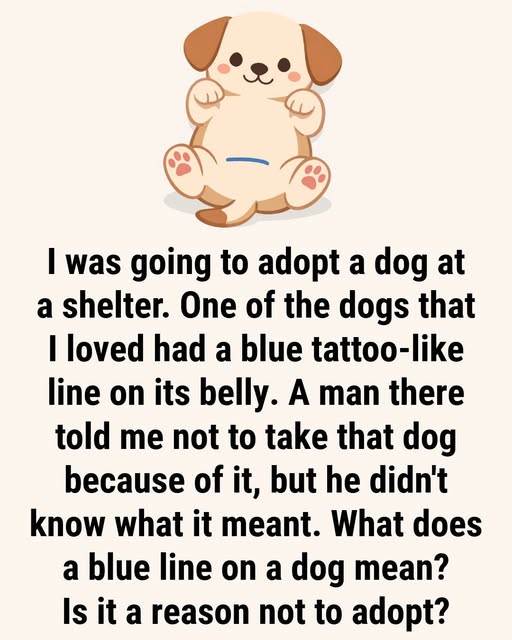
That tiny blue line on a dog’s belly isn’t there to be cute. It isn’t decorative. And it definitely isn’t a joke. It’s a quiet mark with a very loud purpose — one that can spare an animal unnecessary pain, invasive surgery, and even risk to their life.
Years from now, when paperwork has been lost, owners have moved on, and no one remembers this dog’s medical history, that faint blue line may be the only thing speaking for them.
Barely visible beneath the fur, that small blue streak is a permanent signal: this dog has already been spayed or neutered. Veterinarians place it while the animal is safely under anesthesia, not as a trend or tradition, but as a safeguard for the future. Surgical scars fade. Records disappear. Shelters and clinics often meet dogs whose past is a complete mystery. In those moments, that simple line becomes invaluable.
Without it, a veterinarian may have no choice but to perform exploratory surgery just to confirm whether the procedure has already been done — exposing the dog to anesthesia, pain, recovery time, and expense for a surgery they never needed in the first place. All of that risk, all of that stress, for a question that a single blue line could have answered instantly.
That tattoo solves the problem in seconds. It quietly tells every future vet, shelter worker, or rescuer: This one’s already been taken care of. No guessing. No cutting. No suffering.
More than that, it represents a choice someone made long ago — to prevent unwanted litters, to reduce health risks, and to act responsibly for an animal’s wellbeing, even without knowing where that dog’s life would eventually lead. It’s a mark of foresight and compassion, carried silently for years.
So if you’re ever asked whether you want that small tattoo when your dog is fixed, saying yes may feel like a tiny decision in the moment. But one day, when everything else has been forgotten, that little blue line could make an enormous difference.