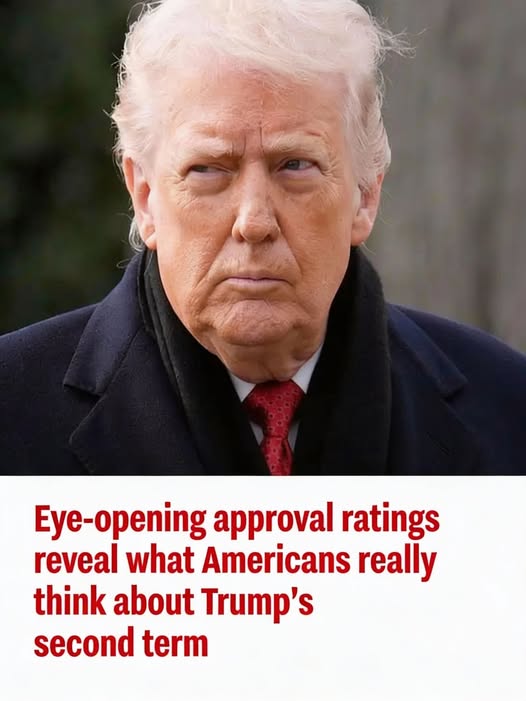
Trump’s second term was meant to be a comeback story—a redemption arc after years of turbulence, controversy, and division. Instead, the data paints a far harsher picture. Poll after poll reveals a nation on edge: a loyal base still standing firm, but a broader public growing increasingly uneasy. Where supporters see defiance, many voters see disorder. Where the White House projects confidence, the country senses drift. The prevailing impression is not strength, but instability.
The warning signs are everywhere. The economy, once Trump’s most reliable shield, is no longer offering reassurance. Rising costs and persistent uncertainty have dulled the impact of his economic messaging. Immigration, another cornerstone of his political identity, no longer unites or energizes voters the way it once did. And then there is one stark statistic—approval hovering around four in ten—that suggests something deeper than partisan disagreement is unfolding. It points to a widening sense of disappointment, even among those who once hoped for steadier leadership.
Beneath the shouting matches, the cable news clashes, and the endless online outrage, a quieter and more revealing reality is taking shape: many Americans are exhausted. Tired of living in a constant state of crisis. Tired of feeling like the country is perpetually “out of control.” Tired of leaders who seem more invested in spectacle, conflict, and grievance than in competence, predictability, and stability.
Trump’s core supporters remain fiercely committed, bound by loyalty and identity as much as ideology. But beyond that circle, patience is wearing thin. The erosion isn’t loud or dramatic—it’s subtle, slow, and deeply consequential. When voters begin to tune out rather than fight back, it signals not just opposition, but disengagement. Not just anger, but fatigue.
Even more telling is the weakening trust on the very issues that once defined Trump’s appeal. If voters no longer see him as a steady hand on the economy, or as an effective force on immigration, the emotional foundation of his political brand begins to fracture. These were not just policy positions; they were symbols of control, strength, and order. Without them, the narrative falters.
Polls, of course, are not destiny. They don’t predict the future so much as reflect the present. And right now, that reflection is uncomfortable. It shows a president struggling to reconnect with a country that increasingly craves calm over conflict, competence over confrontation, and reassurance over rhetoric. More than anything, it shows a nation looking for leadership that feels steady—leadership that suggests someone, finally, is in control.