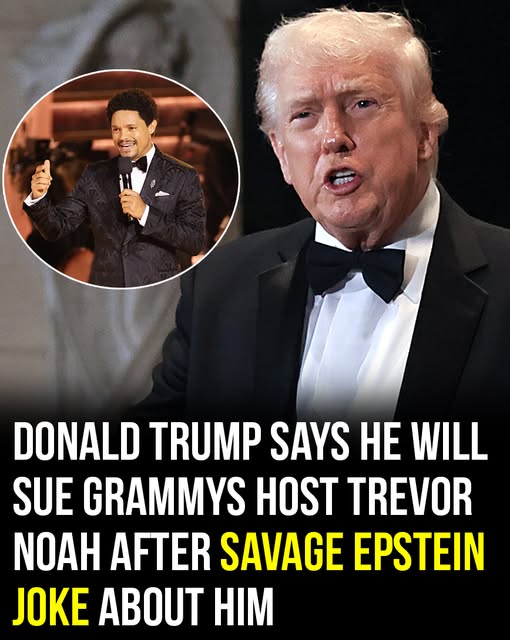
The gasp rippled through the room before anyone quite understood why. Then came the glow of phone screens, dozens at first, then hundreds, rising in unison as if summoned by instinct. By the time the applause faded, the moment had already escaped the walls of the arena and gone feral online. Within hours, the President of the United States was firing off furious posts and floating threats of lawsuits on social media, turning a night of pop glamour into a political firestorm.
The 2026 Grammy Awards were supposed to be a celebration of music’s biggest year. Instead, they became an explosive collision of racy fashion, culture-war provocation, and a razor-sharp Jeffrey Epstein punchline that appeared to strike directly at Donald Trump. What began as glossy Hollywood spectacle quickly morphed into something far more volatile—dangerous, deeply personal, and impossible to contain.
Even before the monologue, tensions were already simmering. Chappell Roan’s daring, boundary-pushing dress had lit up conservative outrage machines and reignited familiar debates about art, decency, and “values.” But that was only the opening act. When Trevor Noah walked onstage, the room relaxed—until it didn’t. With impeccable timing, he delivered a joke linking Greenland, Epstein Island, and the powerful men whose names have long orbited both conspiracy and scandal.
At first, laughter rolled through the audience. Then it tightened, sharpened, as the implications landed. Noah had just woven Donald Trump, Bill Clinton, and the newly released Epstein files into a single, stinging punchline—broadcast live, replayed instantly, and dissected endlessly online. The timing was impossible to ignore. The joke landed mere hours after explosive new documents entered public view, making it feel less like late-night comedy and more like a global act of provocation. Officials were quick to remind the public that appearing in the files does not imply wrongdoing, but the damage—or spectacle—was already done.
Trump’s reaction was immediate and incandescent. Posting from Air Force One and unleashing a barrage on Truth Social, he cast himself as the victim of a sprawling, coordinated smear. In his telling, it wasn’t just a joke—it was an attack. He accused writer Michael Wolff, the Epstein estate, the so-called “radical left,” and now Trevor Noah himself of conspiring to tarnish his name. Promises of massive lawsuits followed, echoing across cable news and social platforms alike.
By morning, the Grammys were no longer about albums or awards. They had become another front in America’s ongoing war over power, truth, and who gets to laugh at whom. In a country already fractured by scandal and suspicion, one joke had turned an entertainment broadcast into a political flashpoint—proof that in this era, even a punchline can feel like an indictment.