Some images don’t just fool your eyes—they quietly peel back the curtain on how your mind truly works. At first glance, they seem innocent: a sketch, a pattern, a simple drawing on paper. But look closer, and suddenly, the picture shifts. What you thought was one thing becomes another entirely. A rabbit turns into a duck. A face becomes a vase. The illusion doesn’t change—you do.
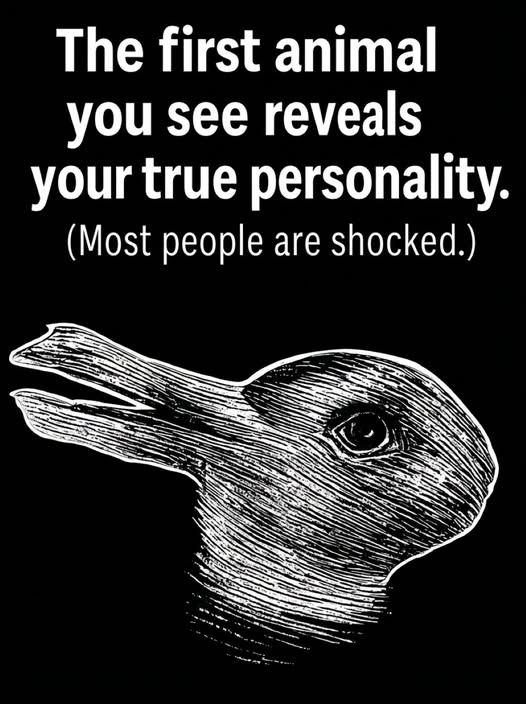
One of the most famous of these drawings hides two animals in plain sight, yet most people see only one at first. That instant reaction, that split-second of perception, isn’t random. It’s your brain speaking—revealing what it values, what it notices first, how it instinctively organizes the chaos of the world. You’re not just looking at a picture; you’re catching your own mind in the act of creation.
When two people stare at the same image and swear they see different things, something profound is happening. It’s proof that reality isn’t just out there—it’s also being built inside our heads. Optical illusions live in that fragile borderland between truth and interpretation, between what exists and what we expect to see. Our brains are impatient architects, racing ahead to fill in missing details, impose familiar patterns, and decide what feels right long before we consciously agree to it.
In the case of the two-animal illusion, what you see first can whisper something about how you move through the world. Spot the rabbit immediately? You might lean toward logic, clarity, and structure—your mind instinctively seeks order. But if the duck appeared first, you might be more attuned to symbolism, nuance, and creative reinterpretation—your brain open to fluid meaning and possibility. Neither is right or wrong; they’re simply different modes of perception, two beautiful ways of mapping reality.
What makes these illusions powerful isn’t that they categorize people. It’s that they remind us how deeply personal vision really is. Every brain edits, filters, and transforms the world in its own way. Every mind builds its own private version of truth.
So the next time you find yourself staring at a picture that refuses to stay still, don’t just ask what you’re seeing—ask why. Because the image isn’t just revealing itself to you. It’s revealing you to yourself.