Your daughter is limping across the room, trying to hide it, but the pain keeps catching up with her. Her eyes are glassy with tears she’s trying not to let fall. Tomorrow is the recital—the one she has practiced for, the one she has talked about for weeks, the one she has pictured herself shining on stage for. And now, even a single step feels sharp, hot, and unbearable.
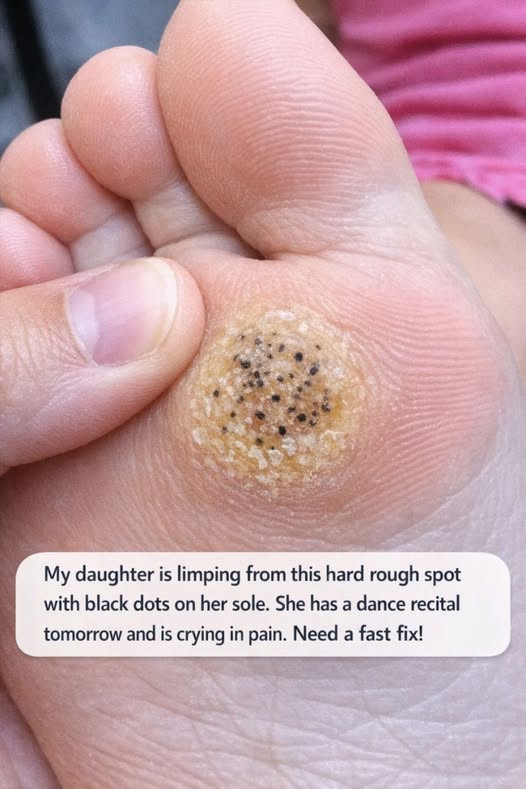
You notice her hesitating when she puts weight on her foot. You gently ask her to show you, and that’s when you see it: a small, rough patch on the sole of her foot. It almost looks like a callus at first glance, but then you notice the tiny black dots embedded inside it. A quiet wave of worry rises in your chest. Your mind starts racing—Is this serious? Will she be able to dance? Will she miss the moment she’s worked so hard for?
Tonight suddenly feels heavy. Every hour matters. Every decision feels important.
What you’re likely looking at is a plantar wart—a small but stubborn viral skin growth that appears on the bottom of the foot. It’s more common than people realize, especially in children. And while it’s not dangerous, it can be surprisingly painful because of where it lives. Every time she steps down, pressure pushes it inward, almost like walking on a tiny stone that refuses to move.
It looks alarming in the moment, especially when it shows up right before something meaningful like a recital. But it’s not a reflection of anything she did wrong. It’s not a sign of poor health or weakness. It’s simply a virus that picked an inconvenient place at the worst possible time.
Right now, the goal isn’t to “fix everything overnight,” but to reduce her pain as much as possible so she can get through tomorrow with more comfort and confidence.
A warm foot soak can help soften the area and ease tenderness. After gently drying her foot, cushioning becomes important—soft pads or protective moleskin around the spot can reduce direct pressure when she walks. If appropriate for her age, child-safe salicylic acid treatments can be started, though they won’t work instantly—they’re more of a longer-term solution.
You can also make a real difference just by changing how her foot is supported for the recital. Extra padding inside her shoe, soft gel inserts, or even careful taping to offload pressure around the painful spot can help her move with less sharp discomfort. Looser, softer tights or socks can prevent additional rubbing that might make it worse during movement.
What should be avoided tonight is just as important: no cutting, no digging, no attempting to burn or scrape it away at home. That can make the pain worse and increase the risk of infection. If you notice worsening redness, swelling, fluid, or if she becomes unable to put any weight on it at all, that’s the point to seek medical attention without delay.
But beyond the treatment steps, what matters most tonight is something quieter.
She may or may not dance perfectly tomorrow. The pain may still be there in some form. But what she will carry with her—far longer than this moment—is the feeling of not facing it alone. The memory of you paying attention when it hurt, helping her adjust, finding ways to make things gentler, and standing firmly beside her when she needed it most.
Recitals fade into photos and applause. But support like that stays.