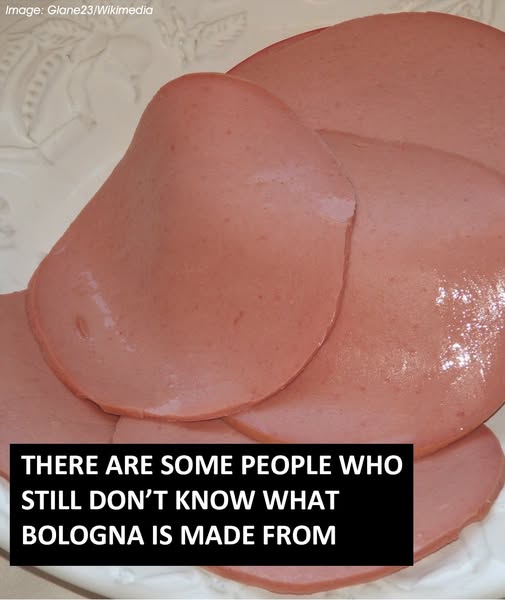
Bologna has always carried a strange reputation—half comfort food, half punchline, and half urban legend (yes, somehow it gets three halves in popular imagination). It shows up in lunchboxes wrapped in wax paper, stacked between slices of cheap white bread, or folded into those familiar neon-pink circles that somehow feel both nostalgic and suspicious at the same time. People grow up eating it, grow up joking about it, and grow up pretending not to think too deeply about what it actually is. And yet—it never really leaves our kitchens.
What makes it so interesting is not just that it’s widely eaten, but that it sits right at the intersection of food culture, history, and modern industrial processing. For something so casually dismissed as “junk meat,” bologna actually has a surprisingly structured and regulated identity. It isn’t a random mixture of leftovers or a vague industrial mystery; instead, it’s a standardized, carefully engineered food product that evolved from a long tradition of sausage-making.
Modern bologna is typically made from beef, pork, chicken, or a combination of these meats. These ingredients are finely ground until they become a smooth, uniform mixture, then emulsified with fat, water, and seasoning to create its signature soft texture. After that, it’s shaped into a long cylinder using either natural or synthetic casings, cooked thoroughly, and sometimes smoked to add flavor depth. The result is that familiar, almost silky slice that can be eaten cold, pan-fried, or layered into sandwiches.
Despite the persistent myths—stories about “leftover parts,” unidentifiable scraps, or industrial waste—today’s commercial bologna in many countries, especially under U.S. food regulations, is made from clearly defined meat sources that meet strict safety and labeling standards. The truth is far less horrifying than the rumors suggest, even if it is less romantic than people might imagine. What we call bologna is not a culinary accident; it is a controlled, repeatable product designed for consistency, affordability, and mass consumption.
But to understand bologna’s identity, you have to look at its ancestor: mortadella. Originating from Bologna, Italy, mortadella is the refined, older relative—larger, richer, and far more luxurious in character. It is traditionally studded with visible cubes of pork fat, whole peppercorns, and sometimes even pistachios, giving it both texture and visual elegance. Where mortadella celebrates craftsmanship and regional tradition, American bologna takes that same idea and strips it down into something more uniform, accessible, and industrially efficient.
That transformation tells a bigger story about food culture itself: how recipes migrate, evolve, and adapt to different economies and expectations. In America, bologna became a staple of affordability and convenience, a food that could be mass-produced, easily stored, and widely distributed without losing its basic identity.
And if you actually read the ingredient label—often overlooked in favor of assumptions—you’ll find something surprisingly ordinary: meats, spices, curing agents, sometimes sweeteners, and stabilizers that help maintain texture and shelf life. It is not a health food by any stretch, but it is also not the grotesque mystery product it is often made out to be. It is, more accurately, a heavily processed but intentionally designed comfort food—one that reflects the priorities of modern food systems: accessibility, consistency, and cost.
In the end, bologna is less about what people imagine it to be and more about what it represents. It carries nostalgia, skepticism, humor, and practicality all at once. We mock it, we question it, and yet we keep eating it—quietly proving that even the most misunderstood foods can earn a permanent place on the table.