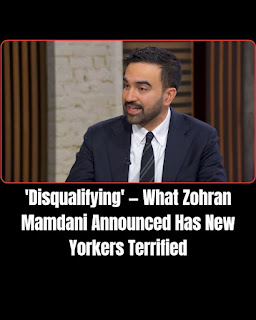
New York didn’t just elect a new mayor. It may have opened the doors of City Hall to a movement with ambitions far larger than one city—and far more controversial than voters realized.
In the weeks following Mayor Zohran Mamdani’s victory, a cache of leaked internal documents began circulating among political insiders. What they revealed was not merely an activist’s wish list, but a playbook—an organized, methodical blueprint drafted by Democratic Socialists of America (DSA) operatives. Their goal: to use the machinery of America’s largest city as a proving ground for a national experiment in economic warfare against Israel.
The files outline a strategy of quiet infiltration and systemic leverage. Every city contract, pension fund, and public-facing partnership is seen as a potential pressure point. DSA organizers speak openly about “testing” boycotts and divestment within municipal structures—what they call “the New York model.” If successful, they plan to export it across the country, turning local governments into engines of ideological enforcement.
The implications are staggering. Under the proposed strategy, city pension funds could be weaponized to blacklist firms with Israeli ties. Municipal banking relationships might be restructured to punish financial institutions deemed “complicit.” Even grocery store suppliers—those sourcing goods from Israeli companies—could face subtle exclusion from contracts or permits. In short, every financial artery of New York could be redirected to serve a cause that blurs the line between political activism and economic coercion.
For critics, the alarm bells are deafening. They point to Mamdani’s own record—his rhetoric comparing the “boot” of the NYPD to that of the Israeli Defense Forces—as evidence that the mayor’s sympathies are not neutral. What once sounded like fiery campaign poetry now reads like an early clue, a glimpse of alignment with a movement that sees governance not as service, but as a form of resistance.
The stakes could not be higher. New York is not a college campus protest zone or a city council experiment in symbolism—it is the financial and cultural nerve center of the United States. It is home to the largest Jewish population outside of Israel and a global hub for philanthropy, media, and finance. A shift in its political currents doesn’t stay local; it ripples outward, influencing national discourse, corporate behavior, and even foreign policy.
If City Hall becomes the staging ground for an aggressive anti-Israel campaign—disguised as social justice or “ethical investment”—the aftershocks will travel far beyond the Hudson. Wall Street, Washington, and communities across the country will feel the tremors.
And that’s the chilling question the leaked documents leave hanging in the air: has New York elected a mayor—or an ideological movement with a long game, using the city itself as its first and most powerful weapon?