“Pretty Woman”: The Fairy Tale That Almost Wasn’t
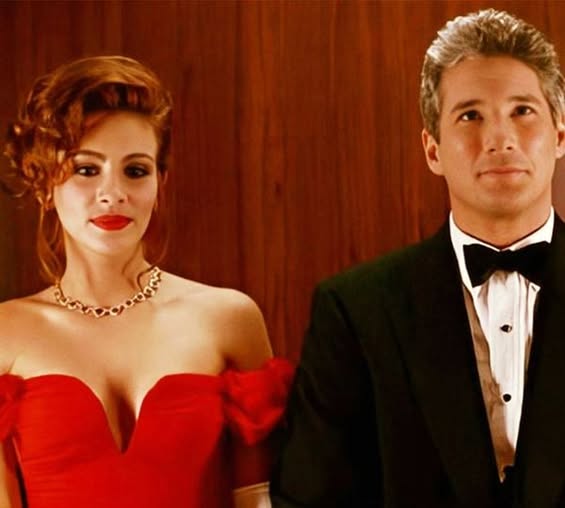
Pretty Woman is one of those rare films that never loses its charm. No matter how many times it plays — on late-night TV, streaming platforms, or even in the background on a lazy Sunday afternoon — it still feels fresh, funny, and effortlessly romantic. There’s something timeless about it: the sparkle of 1990s Hollywood, Julia Roberts’ radiant smile, and Richard Gere’s quiet, gentlemanly allure. Together, they created a love story that millions still know by heart.
But as familiar as Pretty Woman feels, even die-hard fans are often surprised to learn how much went on behind the scenes — including a few unexpected bloopers, subtle inconsistencies, and one shocking truth about the film’s origins. Because Pretty Woman, as the world knows it today, almost wasn’t a romantic comedy at all.
The Movie That Disney Rewrote
Before it became a Cinderella-style love story wrapped in designer dresses and Beverly Hills glamour, the original script had a very different tone — one that was raw, gritty, and heartbreakingly real.
The screenplay, originally titled 3,000, was written by J.F. Lawton, a struggling screenwriter trying to make it in Los Angeles. The title referred to the amount of money Edward (the businessman) pays Vivian (the escort) for a week together. But unlike the whimsical Hollywood version we know, 3,000 was never meant to be a fairy tale.
In Lawton’s early draft, the story explored the dark underbelly of class divide, loneliness, and corporate greed. Vivian’s world wasn’t softened by humor or charm — it was harsh, painted in realism. There was no “big rescue” moment, no shopping spree montage, no happily ever after. In fact, the original ending had Edward leaving Vivian behind, driving away in his limousine as she stood on the sidewalk with the money — a symbolic price tag on a broken dream.
A Radical Transformation
When Disney’s Touchstone Pictures acquired the script, the studio saw potential — but not in its tragic realism. They wanted something audiences could fall in love with. So they handed it to director Garry Marshall, whose signature warmth and humor would eventually reshape 3,000 into the story we know today.
Marshall transformed the bleak narrative into a romantic comedy for the ages, infusing it with optimism, laughter, and the belief that love could bridge worlds. Julia Roberts’ effervescent personality brought Vivian to life with a mix of innocence, strength, and vulnerability, turning what could have been a tragic role into one of cinema’s most beloved heroines.
Little Mistakes, Big Magic
Even with its polished Hollywood finish, Pretty Woman isn’t without its quirks. Watch closely, and you’ll spot a few famous bloopers — a pancake that turns into a croissant between shots, a necklace box that magically opens and closes on its own, and a car that changes color mid-scene. Yet, rather than breaking the spell, these little imperfections somehow make the movie more human — more real.
Because Pretty Woman was never just about wealth or romance; it was about transformation — of a script, a story, and even the people who made it.
From 3,000 to Forever
In the end, Pretty Woman became everything 3,000 was not: joyful, redemptive, and overflowing with heart. It launched Julia Roberts and Richard Gere into superstardom and cemented itself as one of Hollywood’s most iconic love stories.
It’s funny to think that a movie so full of charm and optimism began as something dark and desperate. But maybe that’s why it endures — because beneath all the glitz and laughter, there’s still a whisper of the truth it came from. A reminder that even the most broken stories can find their happy ending.