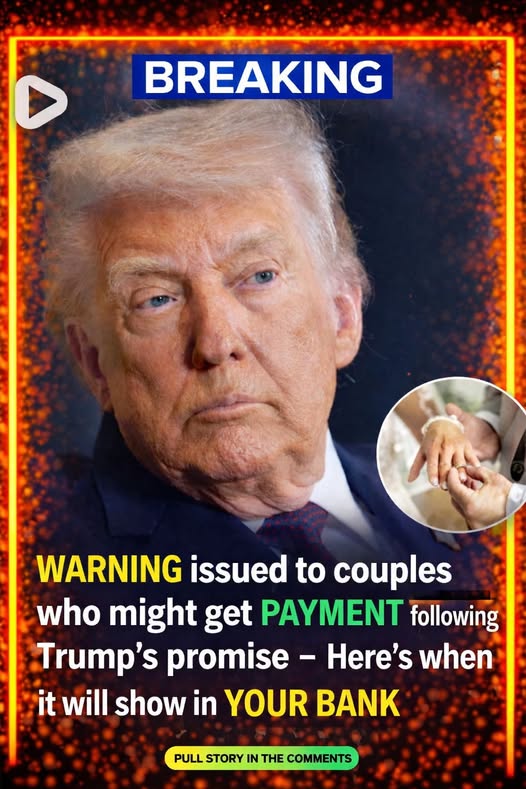
Americans were told to brace themselves—that the squeeze on their wallets was temporary, that the rising costs brought on by tariffs were part of a larger strategy that would eventually pay off. Groceries climbed, everyday goods became more expensive, and household budgets stretched thinner than they had in years. The message from Washington was clear: endure now, benefit later.
Now, that long-promised “later” is being dangled in front of millions in the form of a proposed $1,745 “tariff dividend”—a payout meant to reimburse families for the financial hit they’ve already taken. For households that have spent months, even years, absorbing higher prices, the idea feels like overdue relief. A kind of economic refund. A moment of recognition that the burden they carried wasn’t invisible after all.
But the closer you look, the more complicated—and unsettling—the picture becomes. Beneath the headline numbers lies a web of conditions and uncertainties that could leave many Americans empty-handed. Married couples, joint filers, and families whose incomes edge past certain thresholds may find themselves excluded entirely, even if they felt the same price surges as everyone else. The very people who played by the rules, worked harder, or earned slightly more could be disqualified at the last moment.
On paper, the concept is straightforward: tariffs increased costs, so the government returns money to the people who paid those costs. It’s a clean, almost elegant idea. And when former President Donald Trump floated the notion of a $2,000-per-person payout, it ignited hope—especially as data showed the average household had already absorbed roughly $1,745 in tariff-related expenses. For many, the math seemed to line up perfectly.
Yet reality has proven far messier than the promise. Legal challenges have chipped away at key parts of the policy. Advisors have quietly shifted the narrative, reframing what was once pitched as a broad, reliable payout into something more limited—possibly even a one-time stimulus rather than a sustained reimbursement. Confidence has eroded, replaced by questions and skepticism.
Even Trump’s own remarks have added to the uncertainty. At one point, his offhand comment—“I did do that? When did I do that?”—captured the fragility of the entire proposal. What once sounded like a firm commitment now feels more like a moving target, vulnerable to political winds and legal roadblocks.
For now, everything hinges on two critical numbers: $75,000 for individual earners and $150,000 for married couples filing jointly. Fall below those thresholds, and you might qualify for relief. Cross them—even slightly—and you could be shut out entirely. It’s a sharp dividing line in a situation that has otherwise affected people across the board.
And then there’s the most unsettling possibility of all: that the checks never come. That the promise fades into the long list of proposals that generated headlines but never materialized. If that happens, Americans won’t just be left with higher prices—they’ll be left with a deeper sense of distrust, a lingering frustration, and yet another reminder of how uncertain economic promises can be.
What began as a hopeful idea—a way to make people whole again—now sits in limbo, caught between ambition and reality. And for millions watching closely, the question remains painfully simple: will this relief ever reach them, or is it just another promise that slips away?