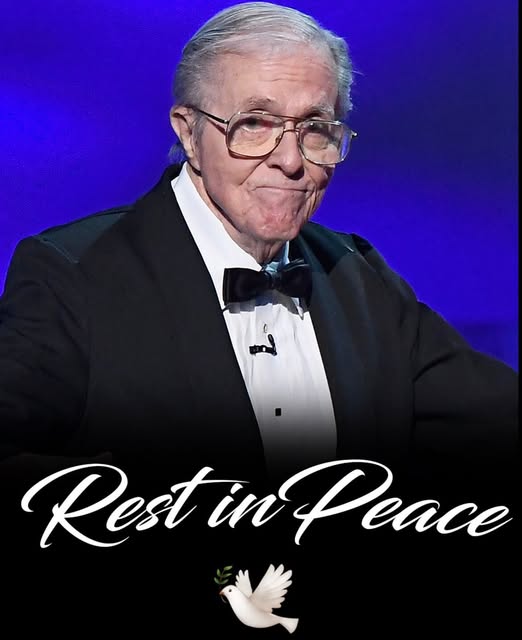
He was never the face on the marquee, but he was one of those actors you instantly recognized without always knowing from where. A bartender tucked into the corner of a sitcom set, a priest standing quietly at the altar, a steady presence in the background of chaos—Charles C. Stevenson Jr. spent a lifetime giving shape and believability to moments that might otherwise have blurred into noise. And now, at 89, his passing marks the quiet exit of one of Hollywood’s most dependable working actors.
In an industry that often celebrates only the loudest voices and brightest stars, Stevenson built a career on restraint, timing, and presence. He didn’t dominate scenes—he stabilized them. Whether he was pouring a drink, offering a line with dry humor, or simply reacting in silence, he had a way of grounding the world around him. The kind of actor whose work you might not always name immediately, but whose absence would be impossible to miss.
To many viewers, he is remembered as Smitty on Will & Grace, a role that never asked for center stage but benefited deeply from his understated performance. He wasn’t there to steal punchlines; he was there to land them softly, to give comedic rhythm a place to breathe. His calm, unforced delivery added texture to the show’s energy, balancing its sharper edges with something warmer and more lived-in. It’s the kind of contribution that rarely gets headlines, but often defines how a scene feels when it lingers in memory.
That same quiet reliability followed him across decades of television and film appearances. He became a familiar face in guest roles—bartenders, officers, clergy, neighbors—the kinds of characters that rarely drive the plot but make the fictional world feel populated by real people. Audiences may not have always known his name, but they knew his type: steady, grounded, believable. The kind of performer who made you trust the scene without realizing why.
Offscreen, Stevenson’s life carried the same steady rhythm. He served in the U.S. Navy during the Korean War, a chapter that shaped an early sense of discipline and resilience. Afterward, he pursued an English degree, stepping into a life that would eventually lead him to acting—not as a sudden leap into fame, but as a gradual arrival into craft. He married, raised children, and later became a grandfather and great-grandfather, roles he valued just as deeply as anything he played on screen.
He once joked that his career amounted to “marrying or burying people,” a nod to the countless priests, officials, and everyday figures he portrayed over the years. But behind the humor was a quieter truth: he was part of the invisible architecture of storytelling. The supporting figures who don’t drive the narrative forward, but make it believable enough for audiences to care.
In an industry often obsessed with leads and spotlight moments, Charles C. Stevenson Jr. leaves behind a different kind of legacy. Not one built on celebrity, but on consistency. Not on fame, but on presence. He proved, episode after episode and scene after scene, that there is real power in simply showing up, doing the work well, and making even the smallest moments feel human.