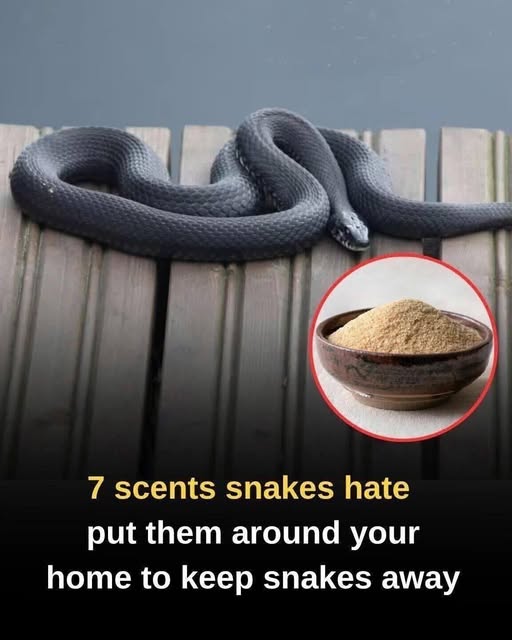
Snakes don’t announce themselves. They don’t knock, don’t warn, and don’t hesitate. They simply appear—silent, sudden, and unsettlingly close to porches, gardens, sheds, and sometimes even inside homes. That moment of discovery often triggers pure panic. Instinct takes over, and the immediate desire is simple: keep them away—without harming them.
That’s where the stories begin.
You’ll hear neighbors swear by ammonia-soaked rags placed near entry points. Others insist that garlic, vinegar, or certain pungent oils will drive snakes out “for good.” Garden forums and old folklore repeat the same list like a secret recipe passed down for generations. But mixed in with all this confidence is confusion—because for every person who claims success, another calls it useless.
The truth is more nuanced, and far less magical than the rumors suggest.
Snakes live in a world dominated by scent. They don’t rely heavily on vision or sound the way humans do; instead, they interpret their environment through highly sensitive chemical receptors. This means strong odors can indeed affect their behavior—at least temporarily. Harsh fumes like ammonia may irritate or overwhelm their sensory system, making treated areas unpleasant for them to cross. However, that effect fades quickly as the smell evaporates, and it must be used cautiously because it can also pose risks to pets, children, and even beneficial wildlife.
Similarly, natural essential oils such as cinnamon, clove, and eucalyptus are often cited as snake deterrents. When concentrated and applied around foundations, garden edges, or common entry paths, these scents may overstimulate a snake’s sensory perception, encouraging it to avoid the area. But again, nature has its limits—rain, heat, and humidity break these compounds down rapidly, meaning their protective effect is short-lived and requires frequent reapplication.
Then there are household and garden remedies: garlic, onions, vinegar, lemongrass, marigolds, and citronella. Each is believed to contribute in its own way. Some may mask scent trails, making navigation harder. Others may indirectly reduce the insects or rodents that attract snakes in the first place. Plants like marigolds and lemongrass also add a layer of biodiversity that can make a yard less appealing to prey species over time. Still, none of these solutions form an impenetrable barrier.
Because snakes are not truly repelled by one single smell alone—they are influenced by a combination of habitat, food availability, shelter, and safety.
That’s why the most reliable protection is not found in a bottle or a spray, but in consistent, thoughtful maintenance. Sealing cracks and gaps around foundations removes entry points. Clearing piles of wood, debris, and tall grass reduces hiding places. Managing moisture around the home discourages insects and rodents. And eliminating food sources removes the very reason snakes come near in the first place.
When these practical steps are combined with mild scent-based deterrents, the result is not a “force field,” but something more realistic and effective: an environment snakes naturally choose to avoid.
In the end, the goal isn’t to fight nature—it’s to gently redirect it. Snakes play an important role in the ecosystem, controlling pests and maintaining balance. The smartest approach is not elimination, but prevention through awareness, cleanliness, and respect for the natural world they belong to.