The snake was dying—and no one could understand why.
Deep within a remote stretch of wetlands, where mist clung to the reeds and the water moved like dark glass, an enormous anaconda lay in distress. At first glance, it might have looked like any other resting giant of the swamp. But something was terribly wrong. Its body, usually powerful and fluid like a living river, was tense, sluggish, and unnaturally swollen in one section. Each breath it took seemed heavier than the last, as though an invisible weight was slowly draining the life out of it.
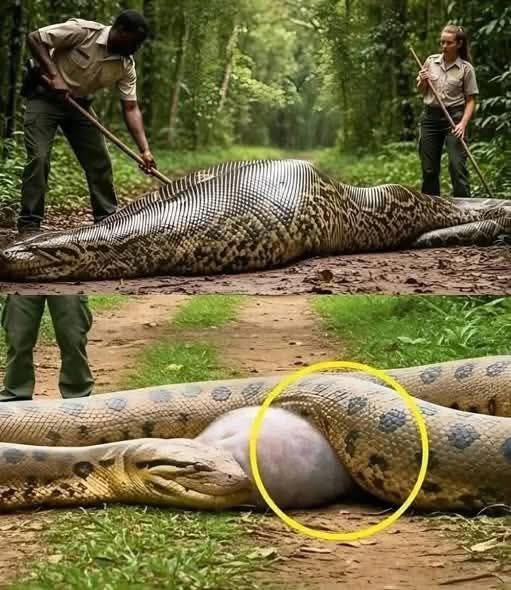
When the wildlife rangers arrived, they had already seen their share of injured and endangered animals. Yet something about this scene felt different—more unsettling, more urgent. The usual sounds of the wetlands seemed muted, as if nature itself was holding its breath. The anaconda barely moved as they approached, its eyes dull but still watching, still fighting.
Carefully, the team circled the creature, speaking in low, steady tones, trying not to escalate its stress. Every movement mattered. One wrong decision could worsen its condition—or put the rescuers in serious danger. As they examined the swollen section of its body, suspicion quickly turned into grim realization: something solid, unnatural, and clearly man-made was trapped inside it.
The atmosphere shifted instantly. This was no longer just a rescue. It was an emergency—and a warning.
With practiced coordination, the rangers prepared their equipment. There was no room for panic, only precision. Using specialized tools and immense patience, they worked slowly to relieve the pressure without performing invasive surgery in the field. The process demanded absolute focus, as the massive reptile lay weakened but still powerful enough to react unpredictably.
Minutes felt like hours. The swamp remained silent except for the distant calls of birds and the faint rustle of water against roots. Finally, after an exhausting effort, the object was carefully freed. The cause of the suffering was revealed—clear evidence of human waste, carelessly discarded and swallowed by the wild.
As the pressure released from its body, something remarkable happened. The anaconda, once barely responsive, began to stir. Its movements were slow at first, uncertain, but gradually strength returned to its massive frame. Life, stubborn and ancient, pushed back against the brink of death.
Hours later, as the sun dipped low and painted the water in fading gold, the rangers watched quietly as the great snake slipped back into the depths. It moved with more confidence now, disappearing into the dark waters where it belonged.
But what lingered was not just relief—it was reflection.
This rescue had saved a single life, but it also exposed a much larger truth. Even in the most remote, untouched corners of nature, the consequences of human negligence find their way in. What happened here was not an isolated incident, but a warning written in silence: the wild is not immune, and every discarded object can become a hidden threat.
And as the wetlands returned to their quiet rhythm, the message remained—fragile, urgent, and impossible to ignore.