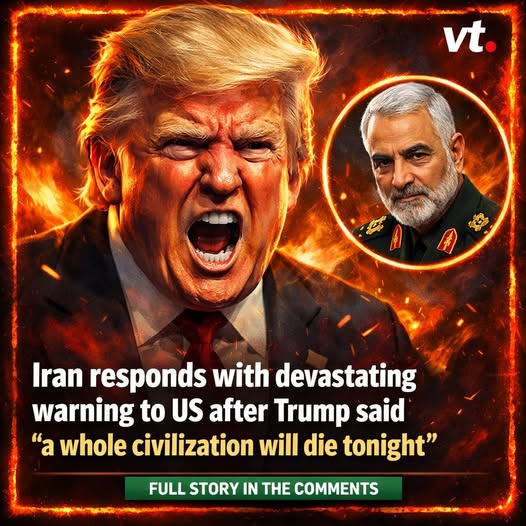
The world seemed to pause in a collective breath, as if history itself were waiting to see what would happen next. 🌍⚡ A chilling warning echoed across global headlines when Donald Trump declared that “a whole civilization will die tonight” if Iran refused to comply with his demands. The statement landed like thunder, amplifying fears that a regional crisis could spiral into something far more devastating. As reports of U.S. strikes targeting critical infrastructure surfaced, speculation about the possibility of a wider global conflict surged, and the phrase many had hoped never to hear again—World War III—began circulating with alarming frequency.
At the center of the escalating crisis lies Kharg Island, a strategic oil terminal off Iran’s southern coast that has long been considered one of the nation’s most vital energy lifelines. Flames and smoke rising from the island signaled more than just a military strike—they symbolized a direct blow to the economic heart of Iran’s oil exports. At the same time, tensions intensified along the narrow waters of the Strait of Hormuz, the critical maritime corridor through which roughly a fifth of the world’s oil supply flows. When reports emerged that the strait had effectively been sealed, panic rippled through financial markets. Oil prices surged overnight, sending shockwaves through global economies already struggling with instability. 📈🛢️
Across the Middle East, governments scrambled to assess the rapidly deteriorating situation. Military bases were placed on high alert. Diplomats worked frantically behind closed doors. And ordinary citizens watched the news with growing dread, aware that events unfolding thousands of miles away could reshape their futures overnight. The Gulf region, long familiar with tension, suddenly felt like a pressure cooker on the verge of exploding.
For Trump and his allies, the confrontation was framed as a defining moment—an unavoidable clash that would determine the balance of power in the region for decades to come. His ultimatum signaled a belief that overwhelming pressure could force Iran to back down. Yet critics warned that such rhetoric, combined with direct military action, risked pushing both nations toward a point of no return.
Iran’s response was swift and uncompromising. Officials in Tehran dismissed diplomatic overtures and instead signaled readiness for a long and punishing confrontation. Military leaders warned that if attacks continued, they would retaliate not only against military installations but also against the energy grids, technology hubs, and communications networks tied to both Israel and American interests throughout the region. ⚠️
Missiles soon streaked across the skies, with launches directed toward targets in Israel. At the same time, retaliatory strikes reportedly hit strategic facilities within Iran itself. The theater of conflict expanded rapidly—from the eastern Mediterranean to the Persian Gulf—turning what had begun as a tense standoff into a sprawling and unpredictable confrontation. Fighter jets roared overhead, air defense systems lit up the night, and every new explosion added to the sense that the world was edging closer to catastrophe. ✈️💥
Global leaders urgently called for restraint, fearing that even a single miscalculation could trigger a chain reaction no one could control. Energy markets fluctuated wildly, military alliances were tested, and intelligence agencies worked around the clock to gauge the next move from both sides.
Now the world watches with growing anxiety. Each warning issued, each missile launched, each aircraft shot down deepens the uncertainty. The question hanging over the crisis is no longer simply about politics or power—it is about survival.
Are the world’s leaders still steering events, or has the momentum of conflict already begun carrying the region toward disaster? 🌑