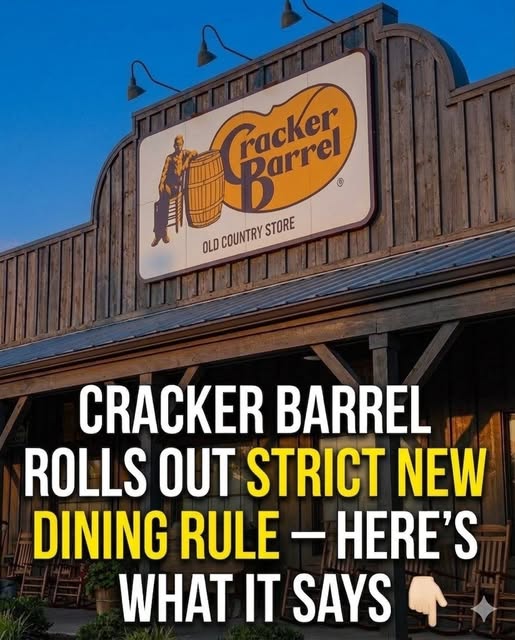
For millions of families across the United States, Cracker Barrel wasn’t just a place to grab a meal—it was a ritual, a comforting pause in the chaos of everyday life. Sunday drives often ended in its warm glow, where front-porch rocking chairs beckoned weary travelers, the scent of fried chicken and biscuits filled the air, and the old country-store shelves offered a playful distraction of knickknacks, candies, and nostalgic Americana. It was a place that felt like home, a bridge between generations, a slice of tradition preserved in neon and wood paneling.
Then something changed. The logo was redesigned. The dining rooms received subtle—but noticeable—updates. The quaint charm that had long defined the experience suddenly felt…different. Loyal patrons noticed. Conversations at the tables turned into online posts. Social media buzzed with confusion, nostalgia, and even outrage. Was the beloved roadside icon quietly trading its soul for a sleek, modern aesthetic? Each new photo, each redesigned corner, seemed to challenge memories held dear, and fans weren’t afraid to voice their disapproval.
Inside Cracker Barrel, the story was far more complicated. Executive offices and corporate corridors buzzed with debates over design choices, menu layouts, and customer experience strategies. Internal memos circulated, travel policies were reconsidered, and discussions about the balance between modernization and tradition became almost daily affairs. Even guidelines about employee travel—like encouraging staff to dine at company locations—sparked scrutiny, forcing management to clarify the difference between recommendations and mandates. Every decision, from paint colors to procedural rules, became a delicate act of balancing evolution with loyalty to a devoted customer base.
Over time, Cracker Barrel began quietly course-correcting. Some of the classic touches were restored: the familiar textures, signage, and small design elements that longtime visitors cherished. Meanwhile, behind the scenes, operational improvements and less visible upgrades continued to ensure the brand stayed relevant in a rapidly changing dining landscape. Through transparency, careful communication, and subtle adjustments, the company demonstrated that innovation need not erase tradition—that a heritage brand could evolve while still honoring the emotional bonds that made it iconic in the first place.
Ultimately, the Cracker Barrel story isn’t just about a logo or a remodel. It’s a lesson in the fragility of nostalgia, the power of emotional connection, and the challenge every cultural touchstone faces when modernizing. In an era where every update can spark debate, the brand’s journey underscores a universal truth: even icons must tread lightly, because the love of generations cannot be replaced with style alone—it must be nurtured, respected, and carefully carried forward into the future.