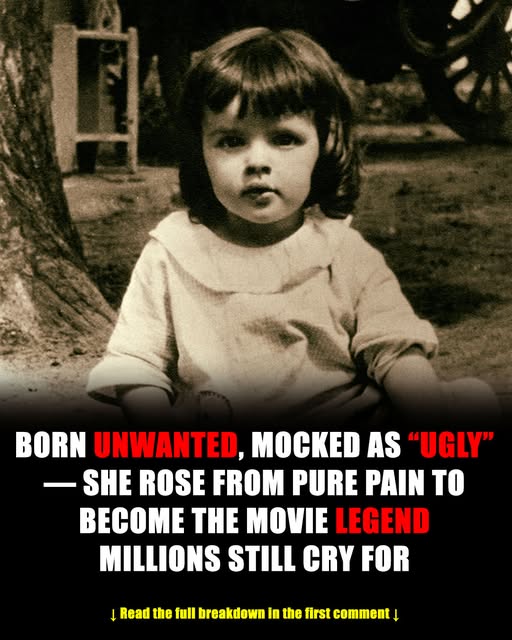
A little girl followed the yellow brick road, her tiny shoes clicking against the polished studio floors, eyes wide with wonder and fear. To the public, she was a miracle, a sparkling star descending from the heavens; to the men in charge, she was inventory—an asset to be counted, measured, and optimized. Beneath the glittering lights and the applause, something fragile and irreplaceable was being dismantled in real time. She was Frances before she became Judy, a child with a heartbeat and dreams before she was repackaged as a product, a person before she was engineered into profit. What becomes of a soul when every heartbeat is timed, every tear medicated, and every smile market-tested until the edges of humanity begin to blur?
She did not begin as an icon. She began as a frightened little girl, learning that love often sounded like applause and felt like pressure, a love measured in ovations and deadlines rather than warmth. On stage, her voice tore through the air, raw and untamed, a force so intimate it seemed to split her open, revealing a depth that no studio contract could ever own. Offstage, the same machinery that adored her talent counted her calories with clinical precision, monitored her moods like inventory fluctuations, and treated her body as a ledger to be balanced. Pills were prescriptions for obedience. Diets were instruments of control. Her very name was rewritten; her image calibrated; her hunger—both physical and emotional—managed into submission.
And yet, each time she sang, the machinery faltered. In those moments, what came through was not MGM’s carefully sculpted creation, but Frances Gumm’s stubborn, wounded humanity, radiant and uncontainable. Audiences felt it: the crack in the veneer, the pain threaded through the perfection, the unspoken longing for someone to see her just as she was. They recognized themselves in that fracture, and they loved her for it. She became more than a star; she became a beacon for anyone who had ever been told that their value depended on performance, perfection, or endurance.
Judy Garland’s legacy is not a fairy tale. It is a cautionary tale, a warning flare lit against the machinery that prizes spectacle over souls. It reminds us that no dream—no golden ticket or standing ovation—should ever cost a child the simple, unassailable right to exist. Her story is both a testament and a tragedy: a voice that transcended the system, and a life that warns us of the cost when the world mistakes brilliance for a commodity, and a child for a product.