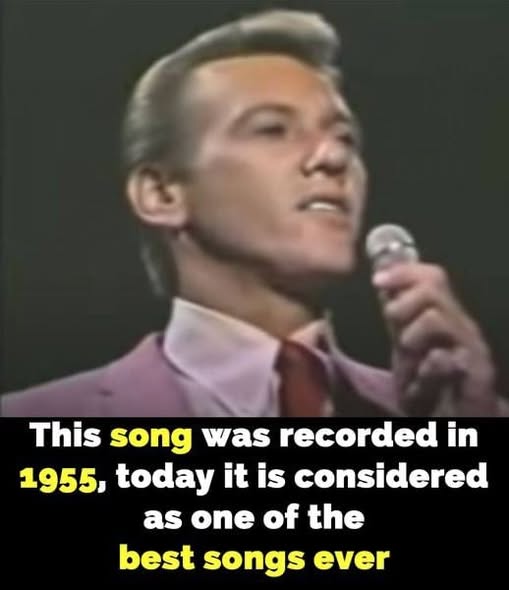
Written in 1955. Revived in 1965. Still Breaking Hearts Today.
Few songs can claim the kind of timeless ache that “Unchained Melody” carries. Its story is drenched in longing, obsession, and a romance so pure it can make even the strongest listener shiver. What began as a movie theme—almost forgotten now—grew into something far greater: a universal hymn for the restless heart, a song that refuses to die, resurfacing in new voices and generations, each time pulling tears, sighs, and goosebumps from its audience.
Originally composed in 1955 by Alex North, with haunting lyrics by Hy Zaret, “Unchained Melody” was created for the little-known prison film Unchained. By all accounts, it should have faded into obscurity with the film’s credits. Yet there was something in its mournful notes and yearning words that refused to stay contained. It escaped into the airwaves, seeping into the veins of popular music like an emotional contagion. The melody carried a quiet desperation, a sense of love stretched thin by separation and longing—universally relatable, quietly immortal.
A decade later, in 1965, The Righteous Brothers recorded what would become the definitive version. Bill Medley’s restrained, powerful production paired with Bobby Hatfield’s voice—a soaring, trembling, painfully sincere wail—didn’t just perform the song; it unleashed it. What was once a modest ballad became an emotional earthquake, shattering hearts across the globe. The vulnerability, the longing, the sheer beauty of it—it made listeners feel that the song was written for them alone, a secret confession whispered in the dark.
Even Elvis Presley, ever the master of emotion, recognized the raw power hidden in those notes. In his later years, he made “Unchained Melody” a centerpiece of his performances, sometimes barely holding himself together on stage, every line a testament to love’s fragility and devotion. Over time, more than 670 artists have tried to make the song their own, yet none can alter its essence: a desperate, unshakable hope that love can endure time, distance, and doubt.
Decades later, “Unchained Melody” continues to break hearts. Each cover, each performance, adds another layer of longing, another echo of what it means to ache for someone, to love without guarantee, to hope against despair. It is a song that refuses to age, a song that refuses to let go, a song that feels like a private confession between the listener and the infinite possibilities of love itself.