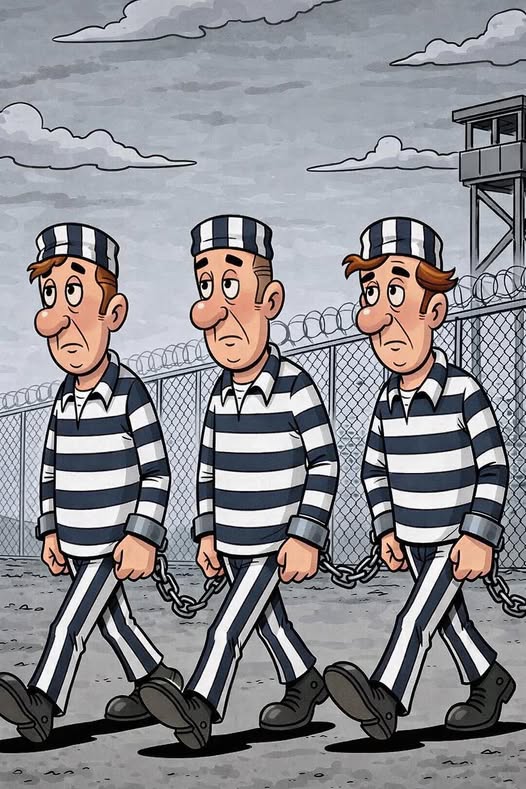
The bus hummed along the empty stretch of highway, its monotony broken only by the occasional rattle of the wheel. Silence hung heavy until it was shattered by the first punchline. Three convicts sat shoulder to shoulder, each tasked with naming the single “essential” item they would take with them behind bars—an exercise meant to pass the time but quickly revealed the absurdity of human imagination when freedom is stripped away. One dreamt of turning blank walls into masterpieces, sketching and painting his way to a fame that might never come. Another plotted endless gambling schemes, rolling dice and flipping cards in his mind, clinging to chance as if it could reorder a life already written in ink. The third… the third held up something so absurd, so startling, that it left the other two staring in disbelief, mouths half-open, eyes wide.
Night fell like a curtain, and the fluorescent bus lights blinked out, leaving shadows to stretch across tired faces. Then came the ritual: a single shouted number, meaningless outside these walls but explosive in their small, secret language. Hardened criminals—men who had survived riots, betrayals, and the slow burn of confinement—collapsed into tears of laughter, laughter that clawed its way up from somewhere deep and unexpected. When the newest man finally dared to speak, his word cracked the air like a spark, and the entire bus erupted. He hadn’t just said a number; he had thrown open a door to something uncharted, a reminder that the human spirit—clumsy, stubborn, irrepressible—could still surprise even the most cynical of hearts.
They thought they were simply killing time, but in those cramped seats, something more profound was happening. One clung to the idea of creation, another to chance, and the third… to a misread joke so ridiculous it turned fear into uncontrollable laughter. For a brief moment, they were no longer convicts, no longer names or numbers or records; they were humans balancing precariously on the edge of despair, grasping at humor, at absurdity, at connection.
Later, in the cell block, the echo of the joke persisted. Numbers, previously just tools of order and control, had become a language of rebellion and relief. Men who had memorized every punchline, endured every torment, and watched the slow erosion of their days still needed to laugh—even if that laughter came encoded in digits. When the newcomer shouted “twenty-nine,” the walls themselves seemed to pulse with the sound of release. It wasn’t the number that mattered—it was the shock of something genuinely new, a spark of unpredictability in a world built on repetition and resignation. Behind bars, where choices were stripped and futures sealed, joy found a way to sneak through the cracks, and in its brief, brilliant eruption, everyone remembered what it meant to be alive.