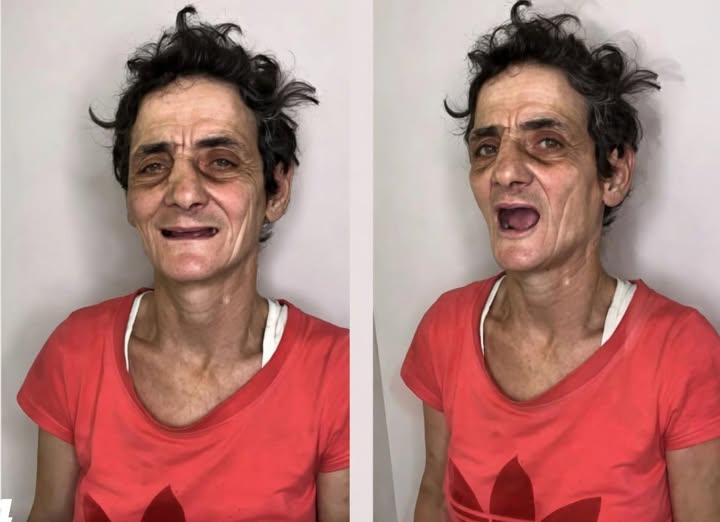
Rita had already lost everything that had once defined her. Her son, taken by circumstances she could never undo. Her home, vanished into a past that no longer existed. Her place in the world, erased so completely that she had become invisible even to herself. For years, she wandered the streets, a ghost among the living, collecting bottles and cans while passersby pretended she was nothing more than part of the scenery. Each glance that ignored her, each step taken without acknowledgment, carved away a piece of her humanity. She existed in the margins, a life measured only in survival, invisible yet painfully present.
And then, one day, a stranger stopped. Not with pity. Not with a fleeting sense of charity. But with eyes that truly saw her—not the worn coat, the dirt-streaked hair, or the tired lines on her face, but her. That moment, simple and unassuming, became the first tremor in the walls of despair that had enclosed her life. What followed was neither grandiose nor dramatic—it was something far more dangerous to hopelessness: dignity. Slowly, subtly, it seeped into her bones.
The dentist’s chair was more than a seat; it was a declaration that she deserved care. Each careful touch on her hair was more than a grooming—it was a reminder that someone recognized her existence. The quiet patience while her nails were cleaned and painted spoke louder than any words: you are still here. You still matter. For a woman who had been treated as if she were disposable, these small, deliberate acts of attention were revolutionary. They whispered that her worth had never been lost—it had only been overlooked.
As Rita gazed at her reflection, something extraordinary began to happen. The face staring back at her, once foreign and hollowed by loss, began to soften. Her grief did not disappear; it did not vanish like smoke in the wind. But it found space beside something it had never dared to touch before: possibility. She began to stand a little taller, to meet strangers’ eyes a little longer, to imagine not merely surviving at the edges of the world, but stepping back into it fully. Every smile returned, every careful gesture she allowed herself, became a quiet act of reclamation.
Rita’s story illuminates the razor-thin line between being seen and being abandoned, between invisibility and belonging. It is a testament to the transformative power of simple, persistent human kindness—acts that demand nothing but attention, patience, and respect. A single encounter, one choice to honor rather than pity, can pull a life back from the brink. And in that return, dignity blossoms, grief softens, and hope begins to take root again in the most unlikely of places.