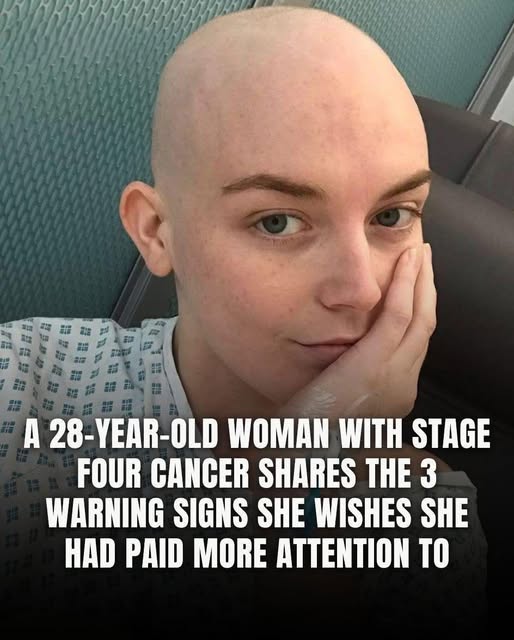
Exhaustion wasn’t just following her anymore—it was consuming her.
It wasn’t the ordinary kind of tiredness that could be fixed with a long weekend, an extra cup of coffee, or a few early nights. This was something deeper, heavier, almost invasive. The kind of exhaustion that settled into her bones and refused to leave. Even when she smiled through it, even when she kept showing up, something inside her was quietly breaking down.
For eighteen long months, Georgie Swallow lived in that unsettling in-between space where something feels wrong, but no one can see it. Her body had been sending signals all along—soft, persistent warnings that were easy for others to dismiss. Night sweats that soaked through her sleep. Skin so irritated and raw from an unrelenting itch that no cream, no remedy, and no distraction could calm it. A lingering cold that never fully resolved, as if her immune system had simply forgotten how to reset itself. Fatigue that no amount of rest could touch.
She asked questions. She tried to explain. But the answers she received always circled back to the same reassurance: stress, overwork, maybe just burnout. “You’re fine,” they told her. “You’re just busy.” “You’re doing amazing.”
So she kept going.
Until she couldn’t ignore it anymore.
One day, she felt it—a small, strange change in her neck. A lump, growing quietly but decisively, until it was impossible to pretend it wasn’t there. By the time it had reached the size of a peach, the truth she had been brushing past for months was suddenly standing in front of her, undeniable and frightening.
Still, she walked into the clinic hoping for something simple. Antibiotics. A quick explanation. A reassurance that she was overthinking things, that it was nothing serious, that she could go back to her normal life with a bit of rest and medication.
Instead, she walked out into a different reality entirely.
Stage 4 Hodgkin lymphoma.
The words didn’t just land—they collapsed everything she thought she knew about her body, her future, and the safety she had assumed was always there. Life, in that single moment, split into “before” and “after.”
Treatment began quickly, and chemotherapy became her new rhythm—measured in cycles, hospital visits, and waiting rooms filled with fluorescent light and quiet fear. But the cancer wasn’t the only thing it took aim at. The treatment that was meant to save her life also altered it in ways she hadn’t been prepared to imagine.
Her ovaries shut down. At twenty-eight, her body was pushed abruptly into menopause. The future she had always assumed she had time to think about—children, choices, timing, possibility—was suddenly not just uncertain, but gone in a way that felt immediate and irreversible.
While her friends casually debated baby names for “someday,” Georgie found herself grieving something far more complicated: not just the possibility of children she might never have, but the version of herself who once believed those decisions could wait. She mourned a future that hadn’t been lived yet, and a body that suddenly felt like it belonged to a much older story.
And yet, she survived.
Now 32, Georgie speaks with a clarity that only experience can carve out of a person. She refuses to let her story sit quietly in the background, softened or overlooked. Instead, she uses it to reach the people still stuck in that same uncertain space she once occupied—the ones being told they’re fine when every instinct tells them otherwise.
Her message is direct, unwavering, and impossible to ignore: persistent symptoms are not “drama.” They are data. They are signals. They are worth listening to.
You are not difficult for asking questions. You are not wasting anyone’s time by insisting something feels wrong. And you are not “too young” for your own body to need serious attention.
For Georgie, survival is no longer just about living—it’s about speaking. And in sharing her story, she has turned what once felt like silence and confusion into something brighter and more urgent: a warning, a lifeline, and a reminder that sometimes the body whispers long before anyone chooses to listen.