The news landed like a thunderclap breaking over an already electric political storm. A sitting presidential candidate, now revealed to be managing a chronic medical condition, finds himself at the center of a campaign where every breath, every step, and every pause is magnified under relentless public scrutiny. What might have once been a private health update has instead become a national talking point, feeding speculation, sharpening narratives, and quietly reshaping the tone of an already brutal race.
For Donald Trump, the diagnosis of chronic venous insufficiency arrives at a moment when visibility is absolute and mercy is scarce. Cameras follow him constantly. Every appearance is replayed, slowed down, analyzed, and interpreted through the lens of strength, stamina, and endurance—qualities that have long been central to his political identity. The condition itself is widely described as manageable, but in politics, perception often carries more weight than medical nuance.
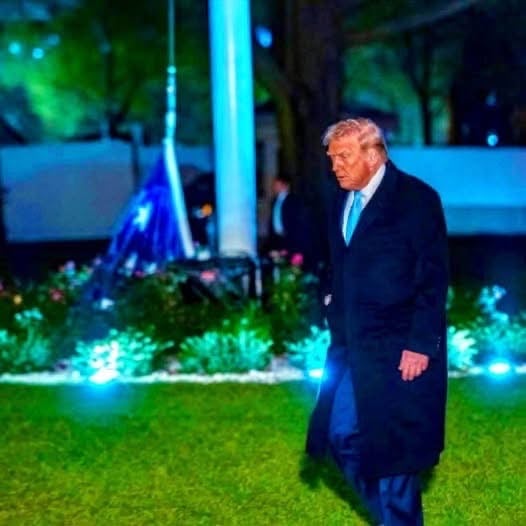
Behind carefully worded statements from his team—emphasizing stable heart health and overall medical reassurance—another story unfolds in the public imagination. Observers note the subtler details: slightly more measured movements, moments of caution, a visible awareness of physical limits that once seemed absent from his public persona. These details, small on their own, accumulate into a larger narrative that is impossible to ignore.
Yet the reaction splits sharply along familiar lines. For supporters, the diagnosis becomes less a limitation and more a symbol of resilience. It is framed as another obstacle in a long list of political battles, reinforcing the image of a candidate who withstands pressure, criticism, and now physical challenge without retreat. In their view, it is proof not of decline, but of endurance under extraordinary strain.
For critics, however, it raises renewed questions—about transparency, about age, about stamina, and about what voters should reasonably expect from someone seeking or holding the highest office. They read each update not as reassurance, but as a reminder of vulnerability in a role that demands constant energy and unwavering presence.
Between these competing interpretations lies a quieter, more human reality that often gets lost in the noise: an aging public figure navigating the unforgiving demands of a national campaign while managing a chronic condition that requires adjustments, awareness, and restraint. It is a reality defined not by slogans or headlines, but by the simple challenge of continuing forward under a weight that is both political and personal.