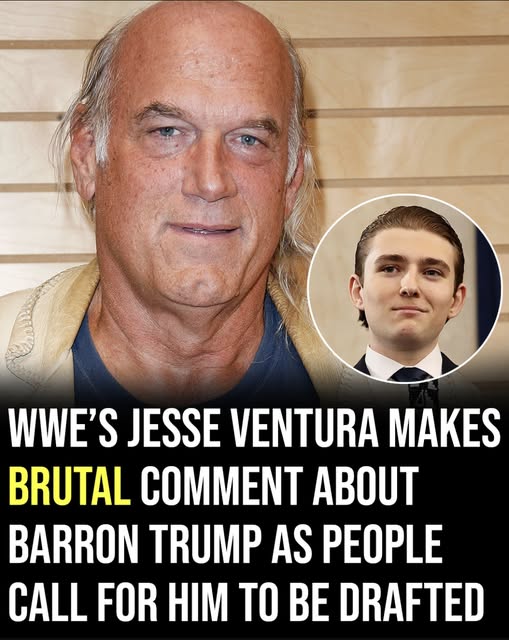
The studio atmosphere shifted the moment Jesse Ventura leaned into territory few expected him to touch. What began as a heated television exchange quickly escalated into something far more combustible—part political confrontation, part moral sermon, part personal accusation—leaving the set of Piers Morgan’s show suspended in an uneasy silence.
Jesse Ventura, a former Navy SEAL, professional wrestler, and outspoken commentator, didn’t ease into his remarks. Instead, he pressed directly into controversy, questioning the narrative surrounding what he referred to as Donald Trump’s 2024 assassination-related injury. Ventura compared the situation to a “blade job” from wrestling—a staged cut used to simulate real injury—suggesting he could not clearly see any visible scar that matched the public story being discussed. His tone wasn’t casual speculation; it carried the force of someone deliberately challenging a widely accepted account on live television.
The tension intensified as Ventura shifted from political critique to deeply personal provocation. Turning his attention to Donald Trump and his family, he escalated the rhetoric in a way that visibly altered the mood in the studio. At one point, he even invoked Trump’s son, Barron Trump, pulling the discussion away from abstract politics and into the realm of family legacy and generational responsibility. It was a move that stunned viewers and prompted immediate discomfort among those present.
Ventura’s broader argument, however, was not simply about one moment or one family. It was framed as a sweeping indictment of political leadership and military sacrifice. Drawing heavily on his own background as a veteran who served in the Navy during the Vietnam era, including time in the Mekong Delta, Ventura contrasted his own service with what he described as a lack of military participation from the Trump family. He emphasized that in his view, leaders who advocate or preside over war decisions should not remain entirely detached from the human cost of those conflicts.
The discussion grew even more charged as Ventura referenced ongoing global tensions, including rising conflict involving Iran and the reported deaths of soldiers in escalating operations. In that context, his remarks took on a sharper edge, as he questioned the moral consistency of political figures who make decisions affecting military lives while remaining personally insulated from combat experience.
By the time he directed his challenge toward Trump’s family, suggesting that even younger generations should consider the same burdens faced by enlisted soldiers, the exchange had transformed from a political interview into something closer to a public moral confrontation. Piers Morgan struggled to steer the conversation back, but the moment had already crystallized.
What remained was not just a controversial soundbite, but a lingering question that hung in the studio air: when leaders send others into conflict, what—if anything—should they or their families be willing to risk themselves?