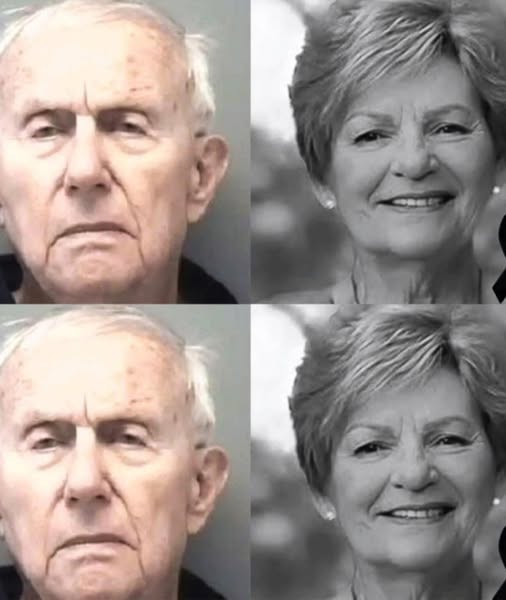
He was 93 years old, a lifetime already carried on fragile shoulders. She was his wife—the person who had stood beside him through decades of ordinary days, shared memories, and quiet routines that slowly became the entire shape of their world. But in the final stretch of their life together, ordinary time gave way to something far heavier: illness, exhaustion, and a kind of suffering that no amount of love could fully shield.
Then, something unthinkable happened inside their quiet home.
Authorities say the husband told investigators that he acted in response to what he believed was his wife’s desperate plea to end her pain. Those words alone have sent shockwaves through the community, not just because of what is alleged, but because of what it suggests about the final moments of a long shared life—moments where clarity, grief, and desperation may have collided in ways no outsider can easily understand.
Neighbors who once saw them as a gentle, inseparable couple are now left stunned, struggling to reconcile the image they knew with the tragedy that has unfolded behind closed doors. To them, the pair were familiar in the most comforting way—always together, always moving through life as a unit. Nothing in that outward picture hinted at the private burden that may have been growing within their home: the steady decline of health, the emotional weight of caregiving, and the quiet erosion of strength that often goes unseen.
Now, investigators, medical professionals, and social workers are trying to piece together a reality that refuses to fit into simple categories. Was this a criminal act, a moment of unbearable psychological collapse, or a tragic decision made in the distorted space between compassion and despair? The reported statements attributed to the husband do not sit comfortably in any clear legal or moral box. Instead, they linger in a painful gray area where intention, suffering, and love become difficult to separate.
As evaluations continue into his mental and emotional state, the case has begun to echo far beyond the walls of the investigation. It has become a painful reflection of issues many families quietly fear but rarely speak aloud: what happens when aging bodies fail, when chronic pain takes hold, and when the person providing care begins to disappear beneath the weight of responsibility.
Experts point to a larger, unsettling truth—how easily caregivers can become overwhelmed until their exhaustion is invisible even to those closest to them. Elderly patients, too, often endure long periods of silent suffering, their needs growing heavier as support systems thin out. In that space between love and burnout, between duty and despair, tragedy can sometimes take root without warning.
Beyond the unfolding investigation, a deeper question lingers over everything: whether society is truly prepared to support people at the end of life in a way that preserves dignity, relieves suffering, and protects both the vulnerable and those who care for them. Because without that support, even the strongest bonds of love can be strained to breaking point—and sometimes, as this case painfully suggests, they do.