The clock is ticking, and with every passing second, millions of votes hang in the balance. In a single Supreme Court case, the quiet, often invisible rules that govern our elections—the rules that decide which ballots count and which are tossed aside—could be shattered. Imagine if “Election Day,” long thought of as a deadline for voters, suddenly became an unyielding hard stop. Mail-in ballots arriving even a day late might no longer be counted, no matter when they were sent. Lawyers are poised for battle. Campaigns are watching every move. And the very foundations of American democracy could tremble.
The fight over mail-in ballots, once the domain of state legislatures and local election boards, has now reached the nation’s highest court. In Watson v. Republican National Committee, the justices are being asked to answer a question with enormous consequences: Does federal law quietly prohibit states from counting ballots that arrive after Election Day, even if they were mailed on time? The implications are staggering. Dozens of states—and millions of voters who depend on mail to cast their ballots—could see their rules rewritten overnight, their expectations upended in a single sweeping opinion.
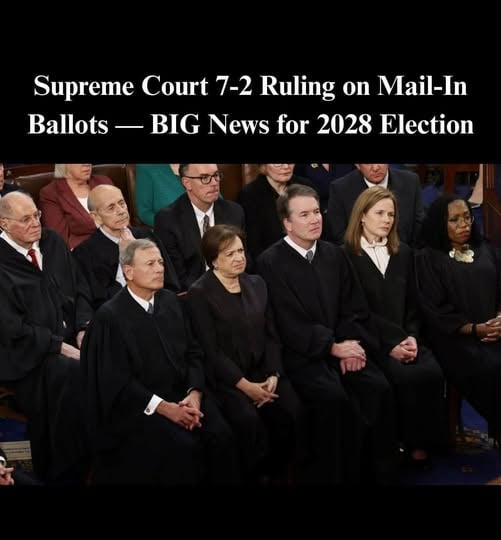
This is not speculation. The Court has already signaled that it is willing to intervene directly in the mechanics of our elections. In Bost v. Illinois State Board of Elections, a 7–2 majority ruled that federal candidates themselves have the right to challenge how elections are conducted. That decision opened the door to a flood of lawsuits whenever a race is close, turning procedural rules that were once quiet background details into the primary arena for political battles.
Taken together, these cases paint a stark picture of the future of voting in America. Election rules—once technical and overlooked—may now become the central battlefield where the fate of campaigns, offices, and even the direction of the nation itself is decided. Every ballot, every signature, every postmarked envelope could be subject to intense scrutiny. In this high-stakes moment, the seemingly mundane details of election law could determine who holds power and who is left waiting in uncertainty. Democracy, it seems, is no longer a quiet process; it is a fight fought not just at the polls, but in the courtrooms that decide whether votes truly count.