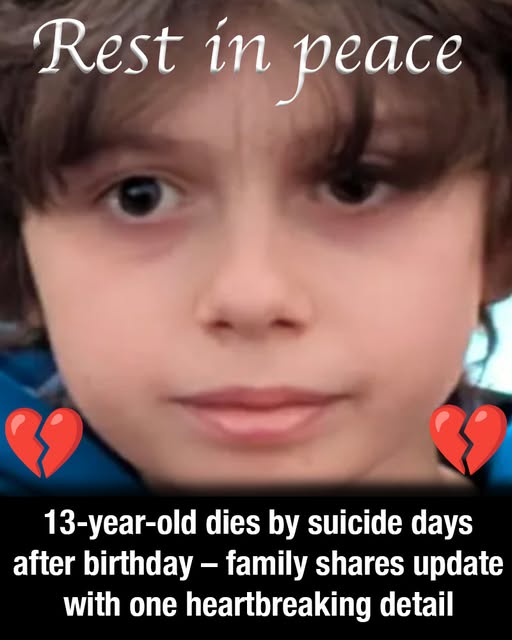
Josiah had just celebrated his 13th birthday, a moment that should have been filled with cake, laughter, and the simple joy of being a child. But just eight days later, his family’s world collapsed. Josiah was gone. Dead. Gone from a life that had barely begun, leaving behind only questions, heartbreak, and a community desperate for answers.
For years, Josiah had cried out for help. His family had been there at every turn—sitting beside him in hospital rooms, advocating for his mental health, pleading with school officials and adults who were supposed to protect him. They watched him return home from the school bus, eyes hollow, body tense, spirit worn down by relentless bullying—torment that was too often dismissed by those around him as mere “attention-seeking.” Yet this was no act. It was a child’s desperate attempt to survive in a world that had failed to hear him.
Josiah Michael Dwinell’s short life is now a devastating warning. After losing his biological mother, he found solace and unwavering love in his “Mimi,” who became his anchor. She fought tirelessly, navigating hospital visits, therapy appointments, and endless conversations with adults, hoping someone would finally see the truth: Josiah’s pain was real, his suffering profound. Repeated reports of bullying—on the bus, in the hallways, and in classrooms—were too often met with shrugging indifference. Every plea, every tear, every quiet admission of fear was minimized, misread as manipulation rather than a call for help.
On what should have been an ordinary ride home from school, the weight of isolation, ridicule, and despair became unbearable. Josiah reached a breaking point that no child should ever face. His death sent shockwaves through his family, leaving them shattered, struggling not only with grief but also the financial and emotional toll of funeral arrangements, and the impossible emptiness of a life cut short.
In the aftermath, Josiah’s family has chosen to speak out, determined to turn their anguish into action. They are demanding change—calling on schools, communities, and systems to take bullying seriously, to recognize the urgent needs of children struggling with mental health, and to never dismiss a young voice in pain as “attention-seeking.” Josiah’s memory now carries a message that echoes beyond his family: listen to children the first time they say they are not okay. Hear them. Believe them. Act before it’s too late.
His story is a haunting reminder of the cost of inaction—and a plea to every adult to ensure no other child is left unheard, unseen, and unsupported.