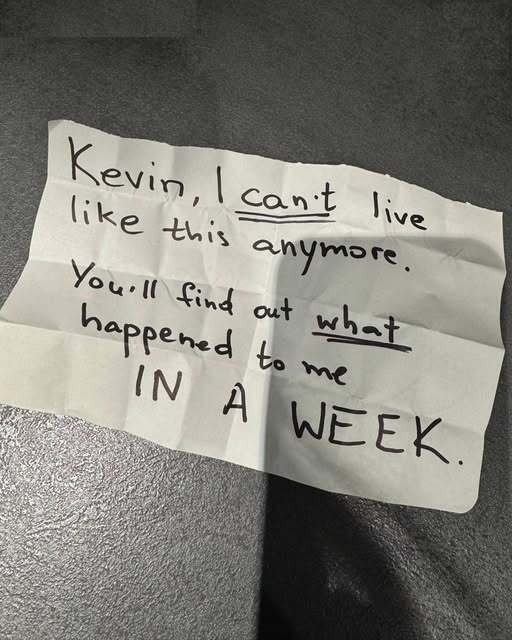
The call came from “Home,” a word that should have meant safety, routine, the soft certainty of a life built together. But when he answered, it wasn’t his wife on the other end. It was their five-year-old daughter, her voice so small it barely seemed to belong to the world at all. She wasn’t crying—just whispering, as if saying it any louder might make it more real: “She left.”
No warning. No argument echoing through the walls. No slammed doors or shattered plates to mark the end of something. Just a letter, folded neatly where it couldn’t be missed—and a house that felt suddenly, impossibly hollow. The kind of silence that follows wasn’t peaceful. It was heavy. It stretched through hours, then days, pressing into every corner of their lives.
For six days, there was nothing but questions with no answers. Meals went half-eaten. Nights blurred into mornings. He moved through it all in a daze, holding himself together for the child who didn’t understand why her world had shifted overnight. And then, on the seventh day, the truth didn’t arrive gently. It didn’t come in a private apology or a quiet explanation. It detonated under bright studio lights, broadcast to millions—her voice, her story, her reasons—unfolding for strangers while he and their daughter sat frozen, watching every second.
He had never imagined himself in this role. Not the man left behind, and certainly not the one trying to explain abandonment to a little girl who still clutched a stuffed rabbit when she slept. But life doesn’t ask for permission before rewriting itself. And in the weeks that followed, that became his quiet, relentless work.
There were no dramatic confrontations. No tearful reunions that tied everything up neatly. Just the slow, unglamorous rhythm of survival. School runs in the early morning chill. Dinners that burned because his mind wandered too far. Laundry piling up. Laughter that felt fragile, but real when it came. He learned things he never thought about before—how to braid Alice’s hair without pulling too hard, how to pack a lunch she’d actually eat, how to recognize the slight tremor in her voice when she asked, “When is Mom coming back?”
And each time, he answered carefully. Honestly—but gently. Telling the truth without letting it break her.
Outside their home, Laurel’s voice carried on. Applause. Spotlights. Stages filled with people who only knew the version of the story she chose to tell. But inside those quiet walls, another story was taking root—one that no one was filming, no one was applauding.
It wasn’t glamorous. It didn’t trend. It didn’t come with neat conclusions or dramatic turns. It was built from small, stubborn moments: a bedtime story read twice because she asked, pancakes on a Tuesday night because she needed cheering up, the way she reached for his hand without thinking.
He began to understand something he hadn’t before—that love isn’t always loud. Sometimes it’s not the grand declarations or the sweeping dreams people chase. Sometimes it’s the choice you make, again and again, to stay. To show up. To build something steady in the space where something else fell apart.
In time, he stopped watching her performances. Stopped searching for answers in a life that had moved on without him. His focus shifted, quietly but completely.
Now, he watched Alice instead—really watched her. The way she laughed with her mouth full of waffles and melting ice cream. The way her eyes lit up over the smallest things. The way, despite everything, she was still learning how to trust the world.
And one evening, sitting across from her at the kitchen table, surrounded by crumbs and sticky fingers and a kind of imperfect peace, it finally settled in:
Some dreams are loud. They demand attention. They burn bright and fast.
But the best ones—the ones that last—grow quietly, in the spaces no one else sees, held together by love that never left.