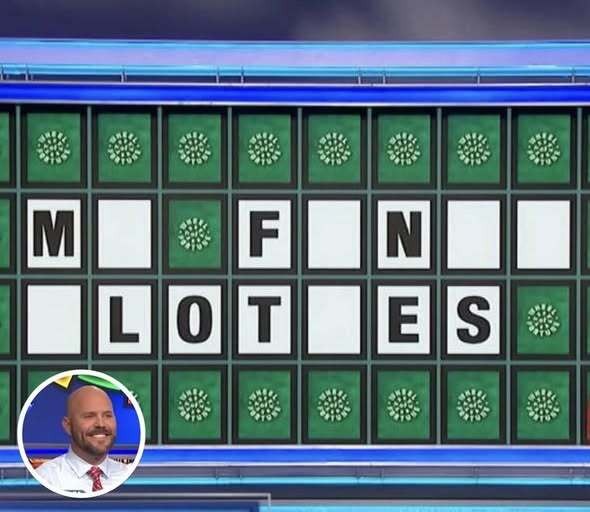
Adam Wredberg seemed unstoppable. From the moment he stepped onto the Wheel of Fortune stage, there was a calm intensity about him that made viewers lean in. Every spin, every letter, every puzzle solved seemed to confirm that he wasn’t just playing the game—he was commanding it. By the time he reached the Mystery Round, Adam had already amassed $13,100 and a dazzling Tahitian cruise, a clear signal that this wasn’t just another episode. Fans could feel it: something extraordinary was unfolding.
Then came the Bonus Round. Standing beside Ryan Seacrest, Adam held nearly $30,000 in winnings and two dream vacations already in his pocket. The puzzle flashed on the board: “What Are You Wearing?” On paper, it seemed straightforward—but as the clock started ticking, the tension mounted in ways even the studio audience could feel. Each second seemed to stretch longer than the last. The letters Adam called filled in some spaces but left stubborn gaps. Time slipped away, heartbeat by heartbeat, until ten brutal seconds remained—and in that fleeting stretch, the perfect win slipped through his fingers.
The final answer, “My Fancy Clothes,” danced just out of reach. Forty thousand dollars vanished in an instant, leaving the audience stunned, the host sympathetic, and Adam himself the picture of graceful composure. There were no dramatic outbursts, no crumpled notes—just the quiet heartbreak of being so close, yet so far.
In the days that followed, fans debated every moment: could he have guessed faster? Was the puzzle unfair? Or was this the kind of nail-biting drama that made television unforgettable? For Adam, the loss wasn’t a failure—it was a testament to skill, strategy, and nerves of steel. And for everyone watching, those ten seconds became a thrilling memory, proof that sometimes, the most exciting moments in life happen when victory hangs by the thinnest of threads.