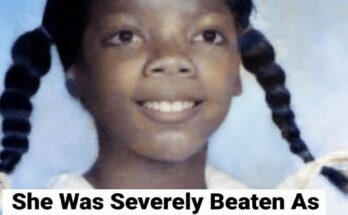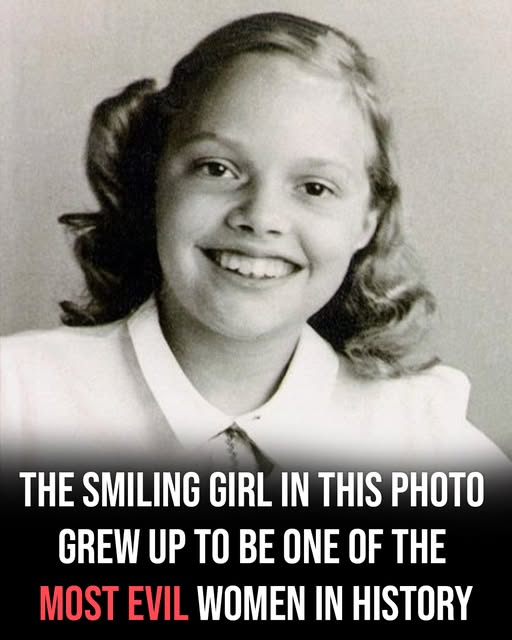
She was born broken, long before the world had a name for what she would become. Before the flashing cameras labeled her a “monster,” before the headlines whispered about a female serial killer prowling Florida’s highways, she was just a little girl—a fragile, abandoned child navigating a world that had no room for her. Left to the mercy of strangers, bruised by hands that should have protected her, she learned early that love was fleeting, that safety was an illusion, and that danger never truly disappeared. Every harsh lesson carved itself into her bones, shaping a survival instinct honed by neglect, fear, and relentless cruelty.
As the years unfolded, she drifted further into the shadows, a specter of grief and rage. The streets became both her refuge and her battlefield, each encounter a test of endurance and cunning. She learned to fight, to hide, to endure—but the scars of her youth refused to fade. Then, bodies began to appear. At first, whispers on local news outlets, then full-blown hysteria. Florida’s highways concealed a dark secret, and every clue, every fragment of evidence, pointed to the same woman. The nation, riveted and horrified, watched as law enforcement, prosecutors, and the media converged on a story they could not believe: could one person truly embody both victim and villain?
In the courtroom, she confronted the weight of her own life’s narrative. Gone was the trembling child or the desperate drifter—here stood a woman confronting her fate, stripped of pretense. The media dubbed her a “female serial killer,” and their fascination was almost obsessive, a macabre spectacle feeding the public’s appetite for horror. Prosecutors painted her as a predator, a calculating murderer who lured men to their deaths with cold precision. She, in turn, insisted she had fought to survive, replaying the terror of each assault, each violation, each moment where survival demanded she push back with whatever tools she could muster.
Death row was a different kind of prison. Beyond the steel bars and high walls, the noise of the world—the endless coverage, the documentaries, the sensational headlines—faded into irrelevance. In that isolation, her story could not be reduced to a simple narrative of crime or punishment. It was tangled with grief and fury, with a lifetime spent in the margins of society, constantly searching for love, for validation, for some semblance of safety. And in those final days, as the end approached, her last words were strange, fragmented, and raw: defiant yet wounded, a human cry impossible to ignore.
Aileen Wuornos’s story refuses to be simple. It haunts because it asks a question we struggle to answer: when a life is forged in abandonment, in abuse, and in violence, at what point does responsibility end—and tragedy begin? She was both a product of her circumstances and a maker of her destiny, a figure simultaneously horrifying and heartbreakingly human. And long after the cameras went dark and the gavel fell silent, her legacy lingers, a stark, unflinching mirror reflecting the darkest corners of survival, pain, and the human heart.