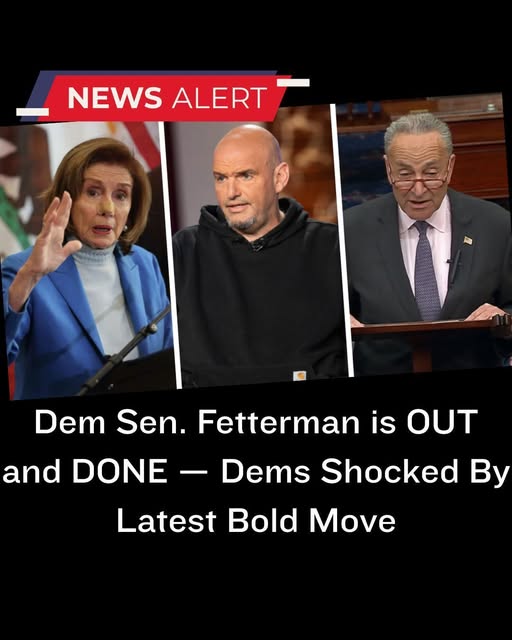
Democrats did not see this coming—and now the shockwaves are spreading. In a move that has left party strategists scrambling, John Fetterman has upended a long-held Democratic talking point in a single, candid interview. He didn’t just challenge the conventional wisdom; he directly undercut Chuck Schumer’s “Jim Crow 2.0” narrative, aligning himself instead with the overwhelming 84% of Americans who believe that requiring an ID to vote is simply common sense. Suddenly, conversations about the SAVE Act, Donald Trump, border security, and the political roadmap for 2026 have a new, unpredictable dimension.
Fetterman’s departure from party orthodoxy is not a minor messaging slip—it’s a seismic cultural signal. By rejecting the charged “Jim Crow 2.0” label and declaring that showing an ID to vote is “not a radical idea,” he laid bare a widening gap between Democratic rhetoric and the views of everyday Americans. Polls consistently show that support for voter ID crosses party lines, yet Democratic messaging has long cast it as a partisan attack. Fetterman’s remarks suggest that the old script—the one that has guided party talking points for years—may be crumbling under the weight of public opinion.
Meanwhile, the political machinery remains locked in a tense standoff. Republicans have rallied behind the SAVE Act, even hinting at resurrecting a traditional, hardline filibuster to force the issue into the spotlight. Democrats, by contrast, are dug in, ensuring the legislation’s likely defeat despite rising voter frustration with what many see as political gamesmanship. This standoff has thrust Fetterman into an unexpected role: the face of a broader reckoning within American politics. He embodies a striking tension—the clash between a party base demanding ideological purity and a country increasingly focused on proof, accountability, and common-sense solutions.
In the middle of debates over election integrity, border security, and looming threats of a government shutdown, Fetterman has emerged as a rare voice willing to bridge the divide. Whether his stance signals a genuine shift in party philosophy or is simply an isolated act of political courage, one thing is clear: the conversation about what Democrats stand for—and how they engage with voters—is about to get a lot more complicated. The shockwaves from his interview are only beginning to ripple, and the question now is whether the party will adapt—or double down and risk further alienation.