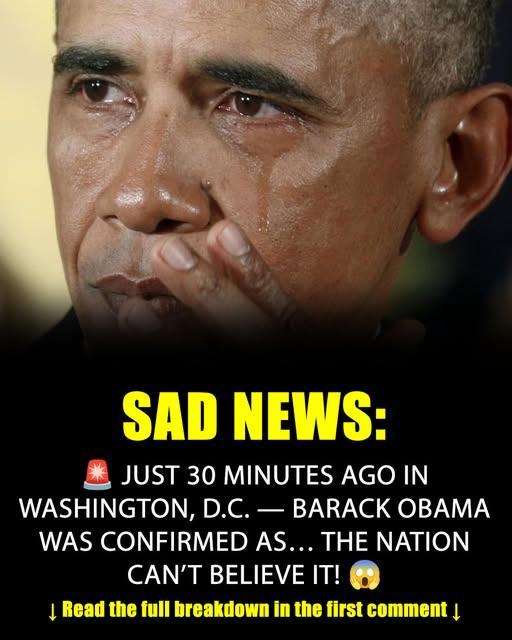
His voice cracked. His eyes welled with tears. For a fleeting moment, the room seemed to forget that he was a former president, a figure of immense power and history, and saw instead a human being finally unburdening himself. Those present later recalled that no cameras were rolling, no carefully crafted script existed. What unfolded was raw, unscripted, and deeply intimate—a sudden eruption of grief, memory, and the weight of choices that had long been carried in silence. Even his closest allies, who had seen him navigate crises on a global stage, whispered among themselves in astonishment.
It began, those in the room say, with a simple reflection—a quiet thought that spiraled unexpectedly into something heavier, something profoundly personal. Barack Obama, speaking softly and deliberately about the toll of public service, paused longer than usual. His gaze fell to the floor, his shoulders hunched slightly, and for the first time, he allowed the emotion to surface instead of restraining it. Words came haltingly, each one measured but filled with the unmistakable ache of memory. He spoke of sleepless nights clouded with doubt, of faces he could never erase from his mind, of decisions that would haunt him long after the headlines faded.
He recounted encounters with families in grief, moments that lingered far beyond the public eye, letters he still revisits in quiet solitude, and the peculiar loneliness that shadowed him after leaving the Oval Office. The carefully constructed facade of invincibility—so familiar to millions—slipped away. In its place stood a man wrestling with the ghosts of power, the relentless responsibilities, and the intimate human costs of leadership. There were no soaring speeches, no applause lines, no moments designed to inspire a crowd. There was only honesty: a candid confession of how leadership lingers, how decisions echo in the mind and heart long after the motorcades have ended and the cameras have gone dark.
Those who witnessed it later described the scene as unforgettable—not a performance, not a political gesture, but a moment of undeniable vulnerability. They had seen history in motion countless times, but now they had seen something rarer still: a wound, a weight, a life of service finally named and shared. And in that moment, the room didn’t see a former president. They saw a man, plain and unguarded, confronting the indelible marks of his journey, and in his honesty, they felt the profound, human cost of leadership itself.