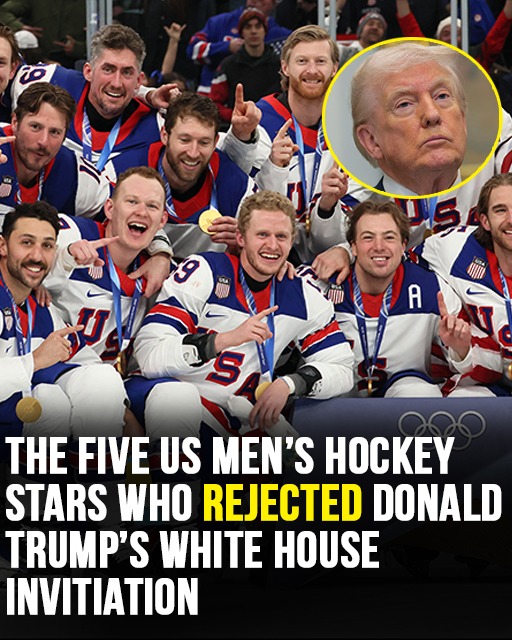
The gold was barely around their necks when the backlash began. A locker-room joke, a presidential invite, and then five silent absences that spoke louder than any speech. Fans demanded answers. Commentators guessed. Some called them cowards, others called them heroes. What really kept these men away from the White Hous…
Speculation around the five absences sits at the intersection of politics, principle, and plain logistics. On the surface, the explanation is simple: NHL seasons are unforgiving, and players like Kyle Connor publicly framed their choice as a professional decision, prioritizing rest, recovery, and preparation over a whirlwind cross‑border trip during a crucial stretch of the year. For elite athletes whose livelihoods depend on performance, that alone is a credible reason.
But timing and context make it impossible to ignore deeper layers. Trump’s polarizing presidency, the charged immigration crackdowns in Minnesota, and the women’s team’s high‑profile decision to skip the event all created a moral backdrop. It’s plausible some players wanted to avoid being used as political theater, without igniting a public war by saying so. Their silence may have been a compromise: honor their careers, quietly guard their values, and let fans decide what that absence truly meant.