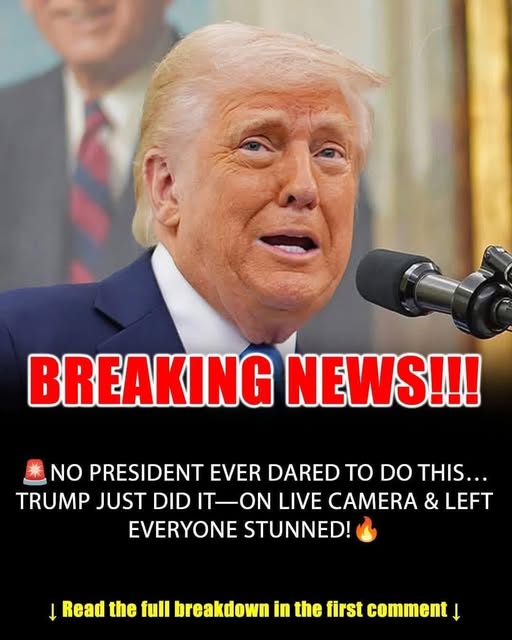
The scene unfolded with the casual intensity that often surrounds Donald Trump’s public appearances—but this time, something was different. During a recent media interaction, the former president departed from his usual rhythm and addressed reporters with a startling level of candor. His tone was direct, his phrasing unvarnished, and his words—delivered with unmistakable confidence—sent shockwaves through the room. For a brief moment, it felt as though the usual political filter had been stripped away, leaving only Trump’s unrestrained thoughts on full display.
Observers and journalists alike were quick to note the change. What began as a routine press opportunity rapidly morphed into one of those rare instances where a politician’s spontaneity eclipses the planned talking points. Within minutes, clips of the exchange were circulating across social media platforms, generating a digital firestorm. The moment didn’t hinge on where it happened, but on how it happened—on the raw, unscripted nature of Trump’s words and the reactions they provoked.
Supporters heralded the remarks as vintage Trump: fearless, unfiltered, and authentic. They praised his refusal to bend to political correctness, arguing that his honesty was refreshing in an age of cautious politicians and carefully polished statements. To them, this was the voice of a leader who says what others only dare to think.
Critics, on the other hand, viewed the episode through a sharply different lens. They argued that Trump’s bluntness wasn’t simply bold—it was revealing. His comments, they contended, exposed deeper sentiments that are usually cloaked in the subtleties of political language. Some called it a deliberate provocation, others a slip of truth. Either way, the reactions were swift, polarized, and emotionally charged.
Political analysts suggested that moments like these capture the essence of Trump’s enduring influence. In an era dominated by controlled messaging and public relations choreography, unscripted candor cuts through the noise. “It’s these raw moments that define him,” one commentator noted. “They make his supporters feel he’s real—and his critics feel alarmed.”
Experts also pointed out the strategic paradox of such moments: they can both electrify a base and alienate the middle ground. For Trump, that balance has always been both his greatest strength and his greatest vulnerability. Every time he speaks with unfiltered conviction, he reignites devotion and outrage in equal measure—ensuring that, for better or worse, his voice continues to shape the national conversation long after the cameras stop rolling.