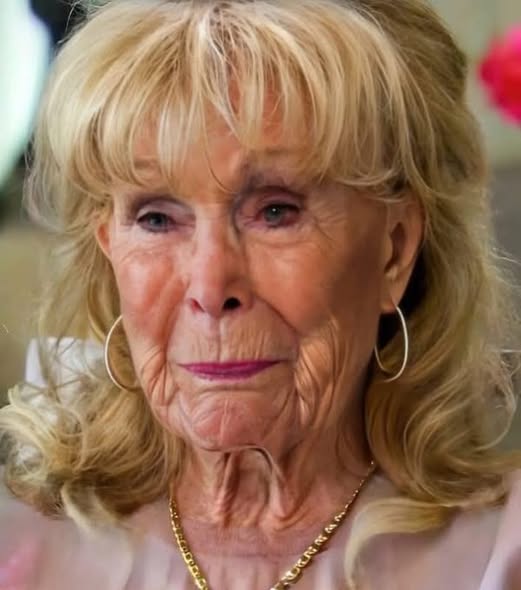
Fame couldn’t protect him, and it certainly couldn’t save him.
Behind the glittering glow of Hollywood lights, where audiences once watched dreams unfold in perfect half-hour episodes, Barbara Eden spent decades embodying magic itself. To millions, she was the unforgettable star of I Dream of Jeannie, a woman who could blink away impossible problems and turn ordinary life into wonder. But off-screen, there was no spell strong enough to shield her from a reality far more painful than fiction.
Her journey had begun long before the fame—rooted in Depression-era hardship, long days of uncertainty, and a childhood where hope itself had to be carefully protected. From choir lofts to band performances, from small-town stages to the bright machinery of Hollywood, she built a career that seemed almost cinematic in itself. She sang with orchestras, shared moments on set with icons like Elvis Presley, and rose into television history with a smile that made the world believe in second chances and impossible wishes.
But when the cameras stopped rolling, a different story unfolded—one far quieter, far heavier, and far more human.
At home, she was not a television legend. She was simply a mother watching her only son slowly slip into a battle she could not fight for him. Addiction crept in like a shadow that never fully lifted, no matter how tightly she held on. There were rehab admissions followed by hopeful recoveries, frantic late-night drives filled with silent prayers, and empty rooms that told her more than any words ever could.
There were relapses that shattered fragile progress. There were stolen belongings, broken trust, and apologies so heartfelt they briefly reignited hope—only to be followed again by silence. And there were those unbearable in-between moments: days when he seemed to return, laughing softly, insisting the world felt clear again, as if the storm had finally passed.
But storms like that rarely end so easily.
At just 35 years old, an accidental heroin overdose ended the long, exhausting fight she had been forced to wage for years. It didn’t arrive with closure—only shock, grief, and the haunting weight of everything left unresolved. The calls that came in the middle of the night, the fear of each ringing phone, the constant bracing for bad news—all of it culminated in a moment no parent is ever prepared to survive.
For Barbara Eden, the loss didn’t erase love. It deepened it into something quieter and more permanent: memory, sorrow, and a lifetime of questions that would never be answered.
Yet even after everything, she continues forward.
Still working. Still appearing. Still smiling when the world expects her to. But beneath it all is a truth she has chosen to carry into public light: that addiction is not a moral failure, but a disease that can consume even the brightest lives and strongest bonds.
By speaking openly about her son, she transforms private grief into a warning and a plea—one final “wish,” not for herself, but for anyone standing at the edge of their own midnight spiral:
Reach for help before the phone rings at 3 a.m. and changes everything forever.