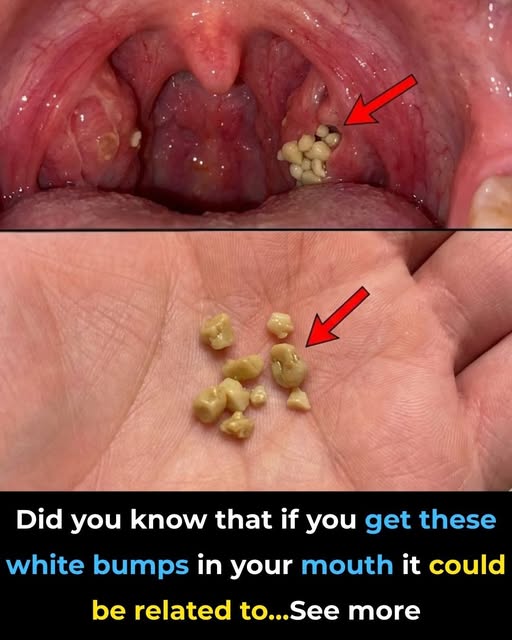
In a world constantly craving the bizarre and the shocking, we simply cannot look away. Enter the unlikely star of the internet: tonsil stones. Tiny, foul-smelling lumps that hide deep in the folds of your throat have become an unexpected viral obsession. Across social media, millions of viewers watch, half-gagging, half-mesmerized, as strangers carefully extract these stubborn nuggets on camera. It’s a spectacle that is at once revolting and fascinating—an unflinching look at something most of us would rather ignore.
These chalky, white or yellow formations are far sneakier than they appear. Born from a mix of trapped food particles, dead cells, and bacteria, tonsil stones slowly calcify, often without announcing themselves. Some people go years without ever noticing them, while others are tipped off by subtle, persistent signs: a scratchy throat, bad breath that no mouthwash can fix, or an irritating tickle that refuses to fade. And then there are the moments of shocking discovery—a sudden cough, a tiny pebble appearing in your sink, and the unsettling realization that it originated from inside your very own mouth.
What makes this phenomenon even stranger is how it straddles the line between education and entertainment. Tonsil stone extraction videos now rack up millions of views, turning a mundane health issue into an oddly compelling spectacle. But behind the cringe-worthy imagery lies a quietly important truth: these videos are teaching people something fundamental about their own bodies. They reveal, in a visceral way, how our mouths and immune systems work, and why paying attention to these small, often embarrassing signs can actually protect our health.
Whether you tackle these pesky stones at home with saltwater gargles, careful tools, or hygienic swabs—or seek professional help—the lesson is clear: your body is talking, often in ways you’d rather ignore. That strange taste, that mysterious tickle, that stubborn bad breath—they are all signals. And maybe it’s time to start listening, before curiosity turns into surprise.