Tonight, a small-town librarian sits behind cold iron bars in Ripley, West Virginia—a town that never thought it would make national headlines for anything other than its quiet streets and community events. One single social media post. One chilling sentence. That was all it took to ignite a firestorm that has now spread across the country. What started as a digital whisper became a legal hurricane. Authorities are clear: this wasn’t politics, debate, or idle frustration—it was a call to kill.
As investigators sift through screenshots, comments, and alleged admissions, the fragile boundary between “free speech” and “terror” is being torn apart in real time. What was once a sleepy library town is now a battleground for a larger, unsettling conversation: how far can words travel before they demand consequences?
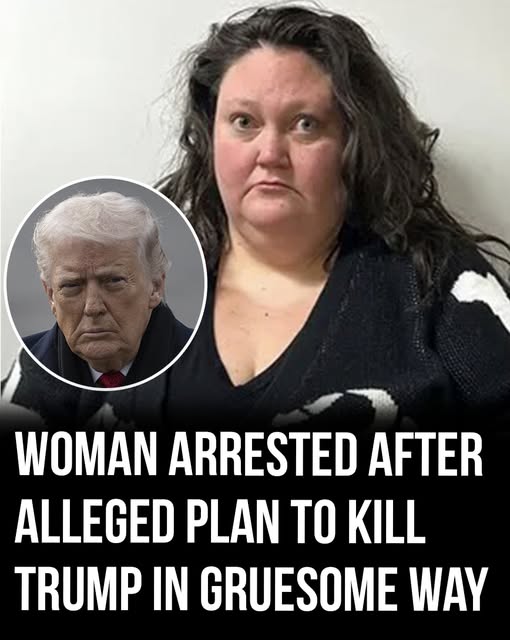
Morgan L. Morrow, the librarian whose face now graces a mugshot labeled with the words “terroristic threat,” is at the center of this maelstrom. The image of someone quietly shelving books, of guiding children to new worlds in pages and stories, has been violently replaced by suspicion, fear, and outrage. Authorities claim Morrow didn’t just vent online—she allegedly struck a spark in a nation already tense and polarized. A single Instagram caption, interpreted as a sniper plea targeting former President Donald Trump, set off an immediate and unrelenting legal response.
The fire only grew in the comment sections that followed. Strangers, emboldened by anonymity, allegedly piled on with fantasies of violence against other public figures, escalating a situation that had once been confined to one post on one account. For investigators, it no longer mattered whether Morrow had a concrete plan; the danger lay in the words themselves—words capable of inspiring someone else to act.
Now, as the Ripley Public Library scrambles to distance itself, and as the case winds its way through the courts, the town faces a sobering question: when a single post can echo across the nation, reverberating far beyond the screen, how late is too late to say it went too far? Ripley’s quiet streets may never feel the same again, and the image of a familiar librarian will be forever shadowed by a chilling reminder of the power—and peril—of words in the digital age.