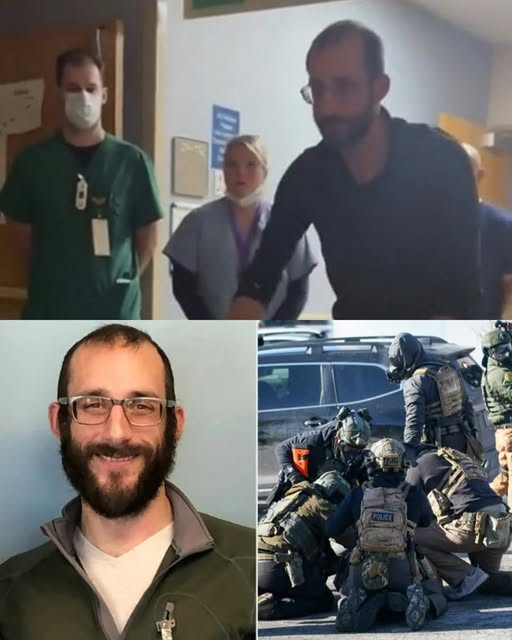
What began as a straightforward account quickly unraveled into something far more complex — and controversial. The early headlines sketched a short, simple narrative: a federal agent shot a man during an enforcement action. But then a woman who says she stood only feet away stepped forward — and everything changed. Her phone captured the turmoil in real time. Her testimony has ignited a firestorm of discussion, raising fundamental questions about what really happened in those critical seconds.
According to her account, the scene before the gunfire didn’t resemble the initial official claims at all. In her telling, Alex Pretti wasn’t some imminent threat — he was trying to help. He had his phone in his hand, recording what was unfolding. A woman was on the ground — shoved, dazed, vulnerable. And then, in a heartbeat, the moment that would define everything: voices rising, pepper spray filling the air, and a chaotic swirl of movement that defies the tidy, early versions of events.
Frame by frame, the video she recorded — portions of which have been reviewed by multiple news organizations and investigators — suggests a very different posture. Pretti appears focused on the woman who had been knocked down, one hand up amid the fray, aiming to shield or steady her. To observers, his stance read not as aggressive, but as protective — someone bracing himself against the surge of federal agents rather than charging into them. That subtle shift in what the footage seems to show is why her recording and her version of events aren’t being dismissed as mere gossip; many legal experts and community members see them as crucial pieces of evidence that merit serious scrutiny.
For Pretti’s family, however, this isn’t just about challenging a headline. It’s about reclaiming the truth of who Alex was. To them, he was not the caricature that initially flashed across cable screens and social media feeds. He was a nurse — an intensive care caregiver, a devoted son, a protector in his community — not a danger. They see a man committed to helping others, now reduced by some accounts to a blur in a news cycle. Their demand is clear: let the full body‑cam footage, every angle from every witness, see the light of day so that the world can judge for itself what occurred.
That call for transparency now sits at the heart of a larger national conversation. Investigators face intense pressure to release all footage and clarify what Pretti was doing in the moments before the shots rang out — and whether the force used was justified. In the absence of those answers, the country finds itself caught between conflicting narratives: the compressed certainty of early reports, the disturbing frames that have emerged from bystander phones, and the vivid, personal testimony of a witness who insists her memory — and her recording — reveal the truth.
Until every piece of evidence is accounted for, that divide will only deepen — between what we were first told, what we think we see, and what one woman swears actually happened on a Minneapolis street that morning.