The room didn’t just fall quiet. It fractured.
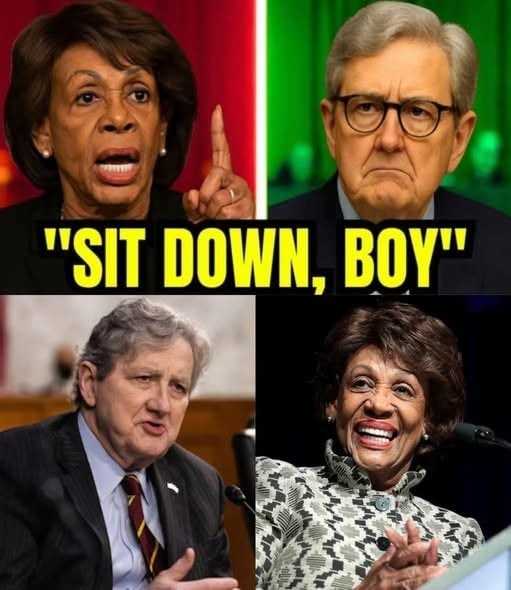
One sharp command—three clipped, unforgiving syllables—and it was as if every hidden fault line in American politics split open at once. The air thickened. Staffers froze mid-motion. Cameras instinctively tightened their focus, hunting for the moment that would define the day. No one shuffled papers. No one cleared their throat. For a heartbeat that felt endless, even the oxygen seemed to hesitate.
And then John Kennedy did something no one in that room was prepared for.
He reached up, slowly, deliberately, and removed his glasses. He looked up—not flinching, not bristling—and in that small, almost ordinary gesture, he reclaimed the moment. The insult was still hanging there, heavy and unresolved, daring him to swat it away with outrage or sharpen it into a soundbite. He didn’t. He let it sit. He let it echo. And in doing so, he refused to let it define him.
Kennedy’s choice not to strike back—with anger, with sarcasm, with the kind of wounded indignation that fuels viral clips—was not weakness. It was strategy layered over humanity. His response, when it came, was calm, measured, almost disarmingly gentle. He made it clear he did not accept the label placed on him, but he also denied his opponent the combustible showdown cable news was salivating for. No shouting match. No theatrical fury. No moment tailor-made for endless replay.
In that single decision, the power dynamic shifted.
This was no longer a man being talked down to. This was a man deciding, in real time, how he would be seen—and how far he would allow someone else to push him into a role he did not choose. The restraint itself became the statement.
Within hours, Waters’ words ricocheted far beyond the room, bouncing across social media feeds, news panels, and dinner tables nationwide. They became a Rorschach test for the country’s most volatile conversations about race, gender, respect, and authority. To some, her remark sounded like long-overdue anger finally spoken aloud. To others, it crossed an unforgivable line, a moment of open disrespect masquerading as righteousness.
But as the noise grew louder, something unexpected happened: the focus slowly shifted.
What lingered wasn’t just what she said—it was how he answered. In a political culture addicted to spectacle, where outrage is currency and volume is mistaken for conviction, Kennedy’s restraint landed like a quiet provocation. It forced viewers to sit with their own reactions. Were they cheering the insult, or the composure? The confrontation, or the refusal to turn it into theater?
In the end, the moment didn’t resolve anything neatly. It didn’t offer a clear hero or villain. Instead, it held up a mirror—one that asked an uncomfortable question of everyone watching: in an age that rewards fury, what does it mean when someone chooses not to give it?