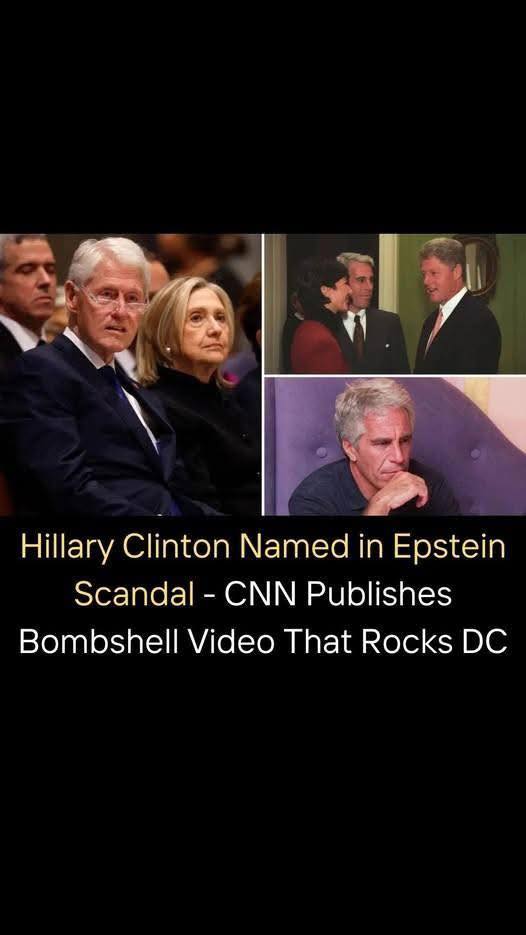
A prison interview they thought had been safely buried has just ripped the cover off a story that refuses to stay quiet.
In a newly released Justice Department transcript, Ghislaine Maxwell speaks with a composure that feels almost chilling. There is no hedging, no rhetorical fog, no frantic backpedaling. Instead, she offers a simple, deliberate assertion: she was “very central” to the launch of the Clinton Global Initiative. The words land softly—and then explode. In that single phrase, years of careful distancing, artful omissions, and public denials begin to look far less secure.
If Maxwell truly occupied a central role in CGI’s founding, the implications ripple outward fast. It challenges the comfortable narrative that has long framed the organization’s early years as pristine, insulated, and far removed from the darker figures orbiting its periphery. Her claim doesn’t merely adjust a footnote or blur a timeline; it raises the far more uncomfortable question of who was present, who was trusted, and who helped shape one of the most influential philanthropic platforms on the global stage.
The unease deepens when Jeffrey Epstein’s shadow enters the frame. According to the transcript, he didn’t just lurk in the background—he observed, encouraged, and sought to benefit from Maxwell’s access and positioning. That connection, long minimized or compartmentalized, suddenly feels less incidental and more structural, woven into the same social fabric that elevated power, wealth, and proximity as markers of credibility.
But the most disturbing aspect of the transcript is not what it confirms—it’s what it leaves unresolved. Who, specifically, empowered Maxwell within CGI’s early orbit? Who vouched for her, opened doors, and placed her on stages where applause flowed freely? And perhaps most troubling of all: why did those doors remain open, why did the applause continue, even after Epstein’s crimes were publicly known?
The document does not prove criminal wrongdoing by the Clinton Global Initiative itself. What it does expose is something more elusive and, in some ways, more damning: a culture in which access was mistaken for virtue, prestige substituted for scrutiny, and reputation acted as a shield against hard questions. It suggests an elite ecosystem so enamored with influence and optics that warning signs were ignored—or quietly rationalized away.
That is why this story refuses to fade. Because beneath the headlines and the personalities lies a deeper reckoning. The scandal may never have been only about two predators. It may also be about the world that welcomed them, validated them, and looked the other way—long after it should have known better.