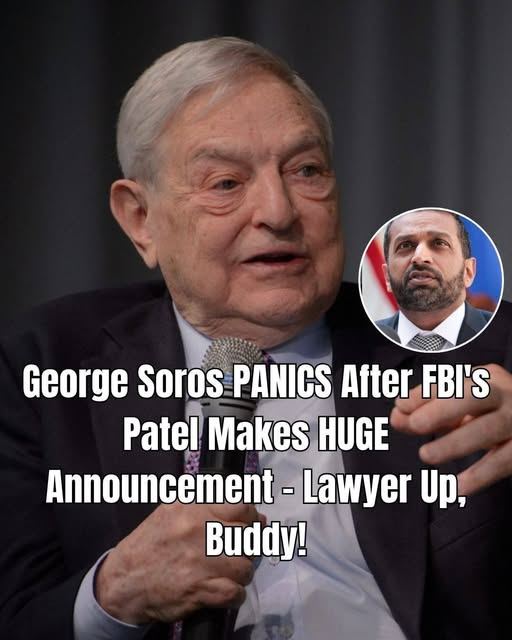
Blood, once spilled, has a way of changing the stakes. What was once dismissed as rhetoric or partisan suspicion has now hardened into something far more concrete: names, dates, grant records, and dollar amounts laid out in black and white. A sitting member of Congress is no longer hinting or speculating — he is formally demanding answers. At the center of the storm are allegations aimed squarely at networks funded by billionaire philanthropist George Soros, accused of promoting extremist rhetoric, endorsing violent unrest, and maintaining disturbing connections to political violence. With the FBI pledging to “follow the money,” the silence in Washington is growing louder — and harder to defend.
Rep. Buddy Carter’s call for a Justice Department investigation arrives at a moment when the country already feels stretched to its breaking point. In a sharply worded letter, Carter cites what he describes as a detailed funding trail, arguing that Soros-backed organizations should no longer be viewed as abstract advocacy groups operating in the realm of ideas alone. Instead, he portrays them as potential engines of real-world consequences — allegedly tied to street-level riots, pro-Hamas rhetoric, and inflammatory material that, he claims, has normalized or encouraged political violence. Among the most explosive assertions are references to rhetoric and networks allegedly linked to threats against high-profile conservative figures, a charge Carter says demands immediate federal scrutiny.
For Carter and those standing with him, this is no longer a philosophical debate about money in politics. It is a question of whether political funding has crossed a dangerous threshold — from influencing elections and public opinion to allegedly fueling radicalization, coordinated unrest, and the conditions for domestic terror. “This is about accountability,” supporters argue, “and about whether the law applies equally when the donors are powerful and well-connected.”
Open Society Foundations has categorically rejected these accusations. In a forceful response, the organization insists its grants are dedicated to lawful advocacy, democracy promotion, and human rights initiatives around the world — not violence, extremism, or criminal conduct. Any suggestion otherwise, it says, is a deliberate distortion designed to chill free speech and weaponize the justice system for political ends.
But Carter’s demand, paired with FBI Director Kash Patel’s public commitment to trace financial pipelines behind what he has described as far-left extremism, ensures that this fight will not remain confined to press releases and talking points. What began as a dispute over nonprofit funding and political influence is rapidly evolving into something much larger: a national reckoning over foreign-linked money, ideological radicalization, and the increasingly blurred line between protected speech and criminal conspiracy.
Whether the investigation ultimately validates or dismantles Carter’s claims, one thing is already clear — the era of looking the other way is over. The paper trail exists. The accusations are public. And the question now gripping Washington is no longer whether this story will unfold, but how far it will go, and who it will ultimately reach.