The internet collectively gasped when the truth surfaced.
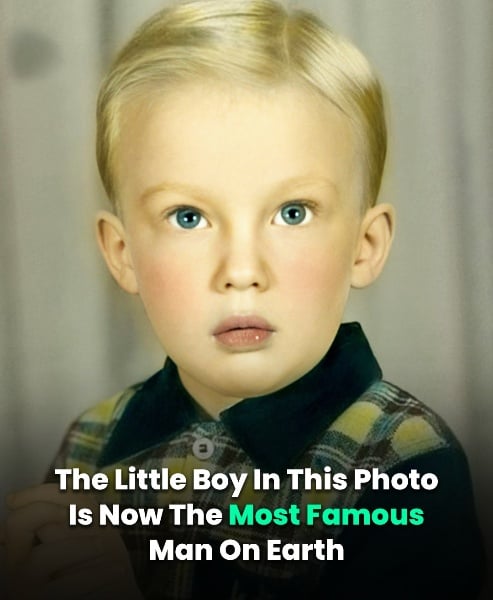
That sweet-faced blond boy frozen in an old, faded photograph wasn’t just a forgotten child from another era. He would grow into one of the most polarizing figures on Earth. The comment sections ignited instantly—astonishment colliding with disbelief, sympathy clashing with suspicion. Suddenly, millions of people were staring at his adult life through an unfamiliar lens, asking a question that felt both obvious and unsettling: What if the story didn’t begin with power, but with childhood?
Behind that innocent gaze was a boy shaped by rigor, pressure, and relentless expectation. He grew up in a household where strength was admired and softness was quietly dismissed, where winning wasn’t just encouraged—it was equated with worth. From an early age, he absorbed the lesson that vulnerability was a liability and that survival depended on projecting confidence, dominance, and control. His father’s unyielding standards and fiercely competitive worldview left little room for gentleness. Affection was conditional. Approval was earned, not given.
Tenderness—the kind many children rely on to feel safe—was replaced by lessons in power, image, and performance. Life, as he was taught to understand it, was a battlefield. You either asserted yourself or were swallowed by someone stronger. Deals mattered. Appearances mattered. Weakness, above all, was something to be concealed.
Complicating those lessons was the quiet presence of illness in the home. His mother’s health struggles cast a long, subdued shadow, shaping his understanding of care and vulnerability in ways that were never fully spoken aloud. Love existed, but it was entwined with fragility and absence, with a sense that stability could vanish without warning.
Military academy sharpened those early instincts even further. The environment rewarded toughness and obedience, but also transformed defiance into leadership and ego into ambition. Structure hardened the edges. Competition became second nature. The boy learned how to command attention, how to dominate a room, how to turn self-belief into a weapon.
Decades later, that child would be known to the world as Donald J. Trump—real estate mogul, television personality, president of the United States. His name would become a lightning rod, his image endlessly debated. To some, he is a fighter, a disruptor, a champion of forgotten voices. To others, he is a warning—an embodiment of excess, division, and the dangers of unchecked ego.
But once that childhood photo resurfaced, it became impossible to see him in simple terms again. The image didn’t excuse the man he became, nor did it condemn him outright. Instead, it complicated the story. It reminded the world that even the most polarizing figures begin somewhere small, shaped by forces long before the spotlight arrived—and that behind every public persona is a past that refuses to stay buried.