The Fall of a Patriot: How Mark Kelly’s Defiance Became a National Flashpoint
The hammer finally dropped.
A sitting U.S. senator — a decorated astronaut, a retired Navy captain, and once a symbol of integrity in public life — now stands accused of “serious misconduct” by the very institution that once saluted him. What began as a murmur of controversy over a single video has now spiraled into a full-blown Command Investigation, the kind usually reserved for active-duty officers, not elected officials. The consequences could be historic.
Allies are silent.
Enemies are circling.
And somewhere between politics and the Pentagon, the line between loyalty and sedition is being redrawn.
From Political Message to Military Crisis
The escalation of the Pentagon’s review marks a stunning reversal of fortune for Sen. Mark Kelly, whose reputation as a disciplined pragmatist once seemed unshakable. A former Navy pilot and astronaut married to former Rep. Gabrielle Giffords, Kelly’s life had long embodied service and sacrifice. But now, that same background is the reason the stakes feel so high.
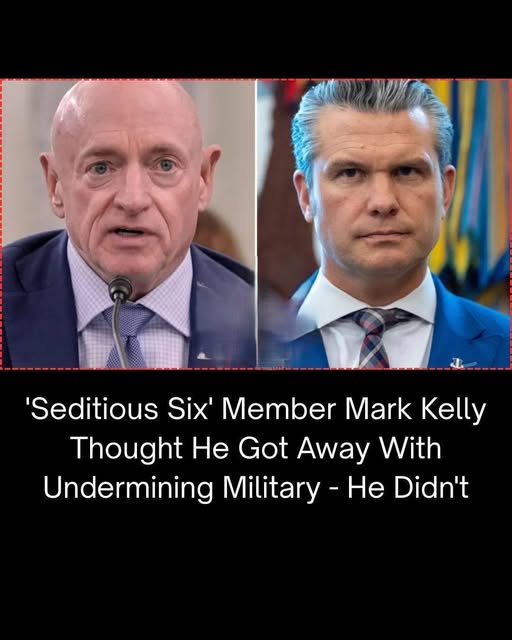
It started as what his team called a “principled statement” — a video in which Kelly appeared alongside several former defense and intelligence officials, urging current service members to refuse “unlawful orders.” The message was meant, they insisted, as a warning against authoritarian overreach, not a call for disobedience.
But to the Pentagon, the nuance didn’t matter. The optics were explosive: a sitting senator, a retired officer, publicly addressing uniformed troops and suggesting there are orders they should reject. What might have played as a political stunt in Washington became something far graver in the eyes of the military establishment.
By invoking the moral duty to resist, Kelly and his allies stepped directly into the minefield separating lawful dissent from perceived insubordination.
The Investigation Unfolds
Now, the situation has evolved into something unprecedented. The Department of Defense confirmed that what began as an “informal review” is now an official Command Investigation, granting investigators authority to compel sworn testimony, subpoena records, and weigh punitive or administrative action.
That phrase — Command Investigation — carries heavy weight in military culture. It means the institution is taking the matter seriously, that it has moved from speculation to scrutiny.
Behind closed doors, senior officials are said to be wrestling with a delicate question: Can a retired officer serving as an elected lawmaker still face military consequences? The answer could reshape the boundary between civilian politics and the armed forces for decades.
Kelly’s defenders call the probe an act of political vengeance — a message to any officer who dares criticize the chain of command. His critics, however, argue that a red line must exist somewhere, and that no amount of patriotism or past service can justify undermining military discipline.
A Collision of Power and Principle
Whatever the outcome, this confrontation has already become a test of America’s civil-military balance — the sacred line that separates those who give orders from those who carry them out.
For Kelly, the stakes are existential. His political career, once marked by calm pragmatism and bipartisan appeal, now teeters on the edge of scandal. If the investigation concludes he violated the Uniform Code of Military Justice or the expectations of retired officers, the fallout could be devastating — not just to his reputation, but to the precedent it sets for all who have served.
For the Pentagon, the moment is equally perilous. Act too softly, and it risks appearing politicized. Push too hard, and it invites accusations of silencing dissent. The tension cuts to the heart of the American experiment itself: Who guards the guardians when politics and the military collide?
A Wound That Won’t Heal Easily
As whispers of possible court-martial swirl and congressional aides brace for political shockwaves, what once seemed like a brief controversy now feels like a constitutional drama in slow motion.
Kelly continues to insist he’s the target of a political vendetta — a man punished for defending democratic principles in an era of growing extremism. But the Pentagon’s tone is far from partisan. Its carefully worded statement spoke of “maintaining the integrity of command” and “preserving trust between civilian leadership and the armed forces.”
It was, in essence, a warning.
No matter how this ends — whether Kelly survives politically or not — one truth is already clear: this clash between a so-called “seditious six” and the Defense establishment will leave a scar. It exposes the growing fracture between America’s warriors and its elected leaders — a reminder that in a democracy built on trust and restraint, the deepest wounds are the ones inflicted from within.