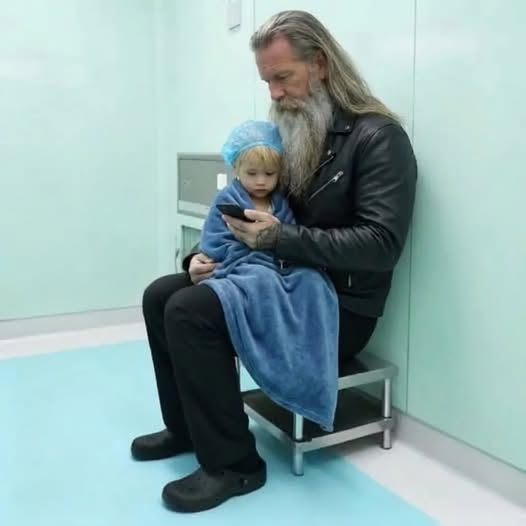
I carried my son out of that hospital with a heart heavy enough to crush me. The doctors had done all they could, and I left believing the rest of his life — and mine — would be a slow, unbearable fading. I imagined quiet rooms, drawn curtains, the ticking of clocks marking the time he didn’t have. But life, in its strange, brutal grace, had other plans.
Because in those final weeks, help came from a place I never would have looked. A man I once might have crossed the street to avoid — leather jacket, tattoos, that hard, road-worn stare — appeared at our door. His name was Mike, and behind him stood his brothers, a crew of bikers whose presence seemed at first like thunder at a funeral. I expected noise, chaos, maybe even pity. What I got was something else entirely.
They didn’t flinch at Liam’s frail body or the tubes and monitors that had become part of our lives. They didn’t whisper soft reassurances or offer hollow words about miracles. They simply showed up. Day after day, engines rumbling like a heartbeat outside our home, they arrived — not to save him, but to be with him. They lifted him onto their bikes with a tenderness that defied their rough edges, letting him feel the wind on his face, the roar beneath him, the world moving fast and alive one more time.
To them, Liam wasn’t a dying child. He was a rider — small, brave, and fierce. They listened when he talked about the stars, about the sound of the road, about dreams he’d never live long enough to chase. And they treated every word as if it mattered more than anything else in the world. There was no pity in their eyes, only a quiet respect that gave him back his dignity, his joy, his power — if only for a little while.
When the end came, it came gently. And on the day of his funeral, those same bikers came too. They didn’t speak; they didn’t need to. They formed a silent line, their leather vests glinting under the pale morning sun, and one by one, they stepped forward to lay single red roses on his tiny casket. The sight of those rough hands trembling as they placed each flower broke something open inside me — not in despair, but in awe.
In that moment, I understood something I never had before: family isn’t always made of blood, or history, or even time. Sometimes it’s forged in the brief, blazing intersection between a child’s courage and a stranger’s unexpected tenderness.
Grief stayed — it always does. But it no longer stood alone. It had been joined by something fiercer and purer: love in its rawest, most unlikely form. The kind that rides in on the sound of engines, carries a boy into the sunlight, and reminds a mother that even in loss, humanity still burns bright.