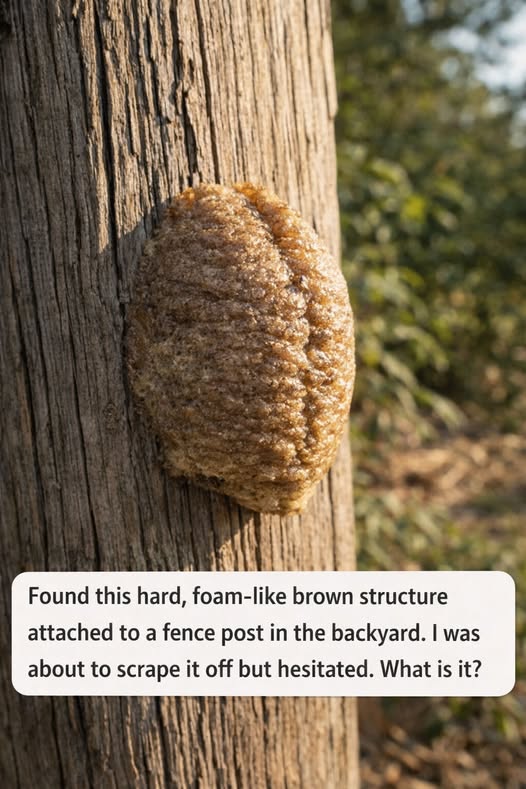
Finding something unusual in your backyard can instantly spark curiosity. Whether it’s attached to a fence post, hidden beneath a leafy branch, or resting quietly on a garden shrub, a strange brown, foam-like object may seem mysterious at first glance. Many people are surprised or even alarmed when they encounter it for the first time, unsure whether it is harmful, dangerous, or something that should be removed immediately. However, nature often hides remarkable wonders in the smallest and most unexpected places, and this curious little structure is usually one of them.
What you are likely seeing is a praying mantis egg case, scientifically known as an ootheca. Although it may appear small and insignificant, this fascinating structure serves as a carefully designed protective home for the next generation of praying mantises. During late summer or early autumn, a female praying mantis creates this casing after laying her eggs. She covers them with a special frothy substance that quickly hardens when exposed to air, forming a durable shield capable of surviving harsh winter conditions. This natural protective layer keeps the developing eggs safe from cold temperatures, rain, wind, and hungry predators throughout the season.
Inside this tiny case, an incredible transformation is taking place. An ootheca can contain dozens, and sometimes even hundreds, of baby mantises developing quietly over several months. Though invisible from the outside, life is slowly growing within. When spring arrives and temperatures begin to warm, the egg case finally opens, releasing countless miniature mantises into the surrounding environment. These tiny insects immediately begin exploring nearby plants, trees, and flowers, continuing one of nature’s most effective forms of natural pest control.
Praying mantises are considered highly beneficial insects for gardens and outdoor spaces. They are skilled predators that feed on many common pests capable of damaging plants and crops. Their diet often includes flies, aphids, caterpillars, mosquitoes, beetles, and other troublesome insects that gardeners constantly battle against. Because of this, mantises help maintain a healthy ecological balance without the need for harmful chemicals or pesticides. Seeing an ootheca in your yard is often a positive sign that your garden supports a thriving and balanced ecosystem.
Beyond their usefulness, praying mantises are also among the most fascinating insects in nature. Their unique appearance, patient hunting style, and remarkable camouflage abilities make them extraordinary creatures to observe. Watching tiny mantises hatch and spread into the garden can become a memorable experience for both children and adults, offering a rare glimpse into the hidden processes of the natural world.
If you happen to discover one of these egg cases, it is usually best to leave it undisturbed. The casing is harmless and plays an important role in supporting local wildlife. However, if it is located somewhere vulnerable—such as on outdoor equipment, a movable object, or an area likely to be damaged—you can carefully relocate it by moving the branch or surface it is attached to rather than attempting to remove the case itself. Gentle handling helps ensure the eggs remain protected until spring.
What may initially appear strange or concerning is actually one of nature’s quiet miracles unfolding right in your own backyard. Instead of something to fear, this tiny structure represents new life, natural balance, and the incredible complexity of the environment surrounding us every day. Sometimes, the smallest discoveries become the most fascinating reminders of how alive and interconnected nature truly is.