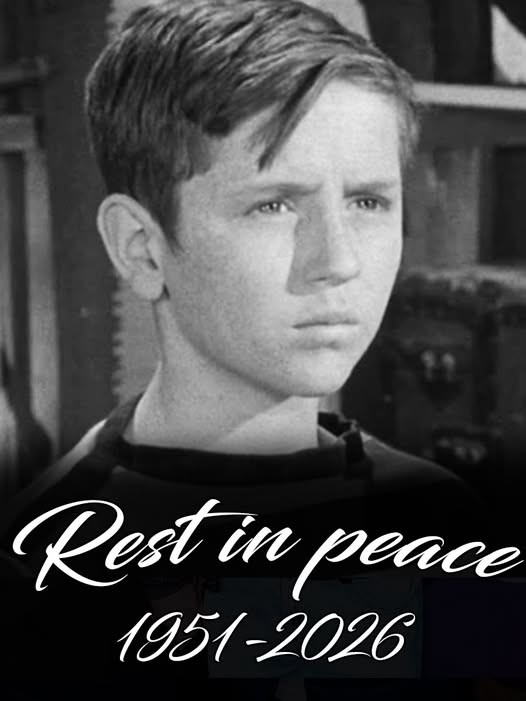
Dennis Rush was gone before many fans even realized a battle had begun. The news arrived with heartbreaking speed: leukemia, a sudden decline, an urgent rush to the hospital, and then silence far too soon. In just a single month, the cheerful boy once seen laughing through the streets of Mayberry became the center of mourning for generations of television fans who grew up watching him during one of America’s most beloved eras. Behind the familiar smiles and wholesome scenes was a child actor whose life carried far more depth, humility, and quiet dignity than most people ever knew.
Long before audiences recognized him as Howie Pruitt on The Andy Griffith Show, Dennis Rush’s extraordinary story began with pure chance. He was only four years old when destiny found him sitting beside his father during a quiet lunch at Universal Studios. His father, an archivist deeply connected to Hollywood history, could never have imagined that legendary actor James Cagney would suddenly notice the young boy and make a life-changing request. Cagney reportedly needed “a little boy” for Man of a Thousand Faces, and in that single unexpected moment, Dennis Rush was pulled into the magical world of film and television.
What followed was the kind of rise many child actors only dream about. During the golden age of television, Dennis became a familiar face in homes across America. His gentle charm, natural innocence, and effortless warmth made him instantly memorable to audiences. As Howie Pruitt, one of Opie Taylor’s trusted friends in Mayberry, he became part of a television legacy that still represents comfort, simplicity, and heartfelt storytelling decades later. Fans didn’t just watch Dennis Rush on screen—they welcomed him into their homes each week, where his bright-eyed performances became woven into childhood memories for millions.
Yet perhaps the most remarkable chapter of Dennis Rush’s story was not his fame, but the way he chose to leave it behind. Unlike so many young stars consumed by the pressures of Hollywood, Dennis quietly stepped away before the spotlight could define or destroy him. By the age of 18, he made the rare decision to walk away from acting completely, choosing a life grounded in normalcy instead of celebrity. There were no scandals, no desperate attempts to cling to fame, and no bitterness toward the industry that made him famous. Instead, he embraced an ordinary life with extraordinary grace.
Even after leaving Hollywood, Dennis never turned his back on the fans who cherished him. At television festivals, cast reunions, and nostalgic gatherings, those who met him often described the same kindness and sincerity they remembered from the screen. There was no arrogance in him, only gratitude and warmth. Former co-stars and longtime admirers frequently spoke of his gentle spirit, a man who carried his television legacy with humility rather than ego. To many, meeting Dennis Rush felt less like encountering a former child star and more like reconnecting with an old friend from a simpler time.
Now, as tributes continue to pour in from fans and fellow performers alike, Dennis Rush’s legacy feels more meaningful than ever. His career may have been brief, but the joy he brought to audiences has endured for generations. In an industry often marked by chaos and tragedy, his life stood apart—a story of quiet decency, unforgettable charm, and a man who understood that true success is not measured by fame alone.
Though his final goodbye came far too suddenly, the memory of Dennis Rush will continue to live on in the black-and-white streets of Mayberry, in the laughter of reruns still watched today, and in the hearts of those who never forgot the little boy who once made television feel like home.